
Unlocking Cloud Sustainability: Green Architectures for Eco-Friendly Solutions
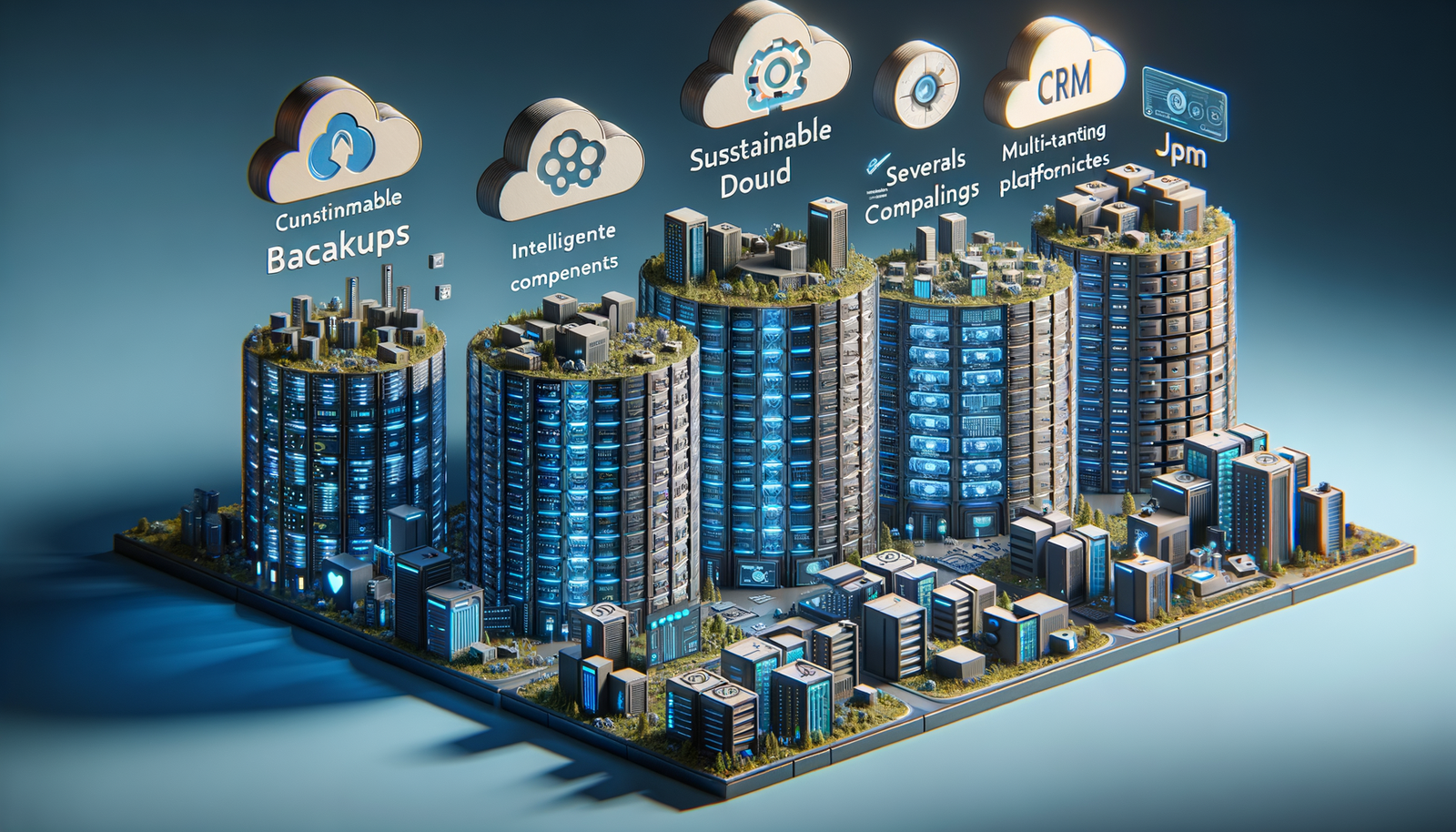
The Pillars of Green Cloud Architecture
Building a sustainable cloud environment rests on core architectural principles designed to maximize efficiency and minimize waste. These pillars transform sustainability from an abstract goal into a measurable engineering outcome, directly influencing data pipeline design, application deployment, and infrastructure management.
The first pillar is Resource Optimization and Right-Sizing. This involves continuously matching allocated compute and storage resources to actual workload demands to eliminate waste from over-provisioned virtual machines or idle assets. For data engineering teams, this means implementing auto-scaling policies for Spark clusters and leveraging tools like AWS Cost Explorer or Azure Advisor to identify underutilized resources. For instance, a batch processing job may only require large instances for two hours daily, scaling to zero otherwise. This principle is critical for a cloud pos solution; its backend services must scale dynamically with store traffic to avoid running peak-capacity infrastructure 24/7, thereby reducing energy consumption.
The second pillar is Carbon-Aware Workload Scheduling. This strategy shifts non-time-sensitive computing to times and geographic regions where the electrical grid is powered by a higher percentage of renewable energy. Data engineers can schedule heavy ETL jobs, model training, or large-scale data backups accordingly. Implementing this for a major data operation, like a cloud backup solution, can significantly reduce the carbon footprint of transferring and storing petabytes. Consider a Python script using a carbon intensity API to identify optimal run times:
from datetime import datetime, timedelta
import requests

def get_low_carbon_window(region):
    # Call to a carbon intensity API (example endpoint)
    response = requests.get(f"https://carbon-aware-api.example.com/emissions?location={region}")
    data = response.json()
    # Find the 3-hour window with the lowest forecasted carbon intensity
    low_period = min(data, key=lambda x: x['rating'])
    return low_period['time']

# Schedule your backup job
optimal_time = get_low_carbon_window('us-west-2')
print(f"Schedule major backup operation for: {optimal_time}")
The third pillar is Architectural Efficiency and Serverless Design. This favors managed, serverless services that abstract away underlying servers, as providers achieve far higher resource utilization in their data centers. Instead of self-managed Kubernetes clusters, use AWS Lambda, Azure Functions, or Google Cloud Run. For data pipelines, leverage serverless options like AWS Glue. This approach is ideal for a crm cloud solution, where event-driven functions can process customer interaction events, scaling instantly from zero and consuming energy only during execution, which improves energy proportionality.
The final pillar is Sustainable Data Management. This encompasses data lifecycle policies, storage tiering, and efficient data formats to minimize the energy cost of data. Implement automatic archiving rules to move cold data to low-energy archival tiers like Amazon S3 Glacier. For analytical workloads, use columnar formats like Parquet or ORC, which reduce the amount of data scanned and the compute required. A step-by-step guide for a data lake might be:
1. Ingest raw data into a high-performance „hot” storage tier.
2. Process and transform it into compressed Parquet format.
3. Apply a lifecycle policy: move files not accessed in 30 days to an „infrequent access” tier, and after 90 days to an „archival” tier.
4. Regularly purge obsolete or redundant data via automated scripts.
Together, these pillars create a framework where every architectural decision is evaluated for its energy impact, leading to systems that are both cost-effective and inherently greener.
Defining a Sustainable cloud solution
A sustainable cloud solution is architected to minimize environmental impact across its entire lifecycle—from resource provisioning and energy consumption to decommissioning. It optimizes for energy efficiency, maximized resource utilization, and carbon-aware computing. The goal is to deliver required performance and reliability while consuming the least possible amount of energy, ideally from renewable sources. For engineering teams, this translates into choices that directly reduce compute, storage, and network footprints.
The foundation is right-sizing resources. Over-provisioning is a primary source of waste. Using cloud monitoring tools, teams can analyze utilization and scale down underused instances. For example, an analytics workload might only need high CPU at night. Using infrastructure-as-code (IaC) tools like Terraform, you can automate a schedule to stop and start instances.
- Step 1: Identify underutilized EC2 instances using Amazon CloudWatch metrics (e.g.,
CPUUtilization < 20%over 7 days). - Step 2: Create an AWS Lambda function triggered by CloudWatch Events to stop instances at 8 PM and start them at 8 AM.
- Step 3: Implement the logic. A simplified Python snippet for stopping instances:
import boto3
def lambda_handler(event, context):
    ec2 = boto3.client('ec2')
    # Dynamically find instances with a specific tag, e.g., 'Environment: Dev'
    response = ec2.describe_instances(Filters=[{'Name': 'tag:Environment', 'Values': ['Dev']}])
    instance_ids = [inst['InstanceId'] for res in response['Reservations'] for inst in res['Instances']]
    if instance_ids:
        ec2.stop_instances(InstanceIds=instance_ids)
        print(f'Stopped instances: {instance_ids}')
**Measurable Benefit:** This can reduce energy consumption and costs for non-production workloads by over 65%.
Sustainability extends to intelligent data management. A tiered storage strategy ensures data resides on the most energy-efficient media. Frequently accessed „hot” data stays on performant SSDs, while archival data moves to low-power object storage. Automating this with lifecycle policies is key. Similarly, a cloud backup solution should leverage incremental forever backups and deduplication to minimize the total storage footprint and the energy required for data transfers.
These principles apply directly to application platforms. A sustainable cloud pos solution can use serverless components (e.g., AWS Lambda, DynamoDB) that scale to zero during off-hours. A crm cloud solution can be architected on multi-tenant PaaS offerings, which inherently improve resource density and efficiency compared to siloed infrastructure.
Finally, adopt carbon-aware computing. Schedule batch data pipelines and machine learning training jobs to run in regions and during time windows with a higher percentage of grid renewables. Tools like the open-source Cloud Carbon Footprint project provide crucial visibility. By integrating right-sizing, intelligent data management, and carbon-aware scheduling, architects build solutions that are robust, scalable, and fundamentally greener.
Core Principles: Efficiency, Renewable Energy, and Circularity
Sustainable cloud architecture is built on three interdependent pillars. First, operational efficiency minimizes the direct energy and compute resources required for workloads. Second, renewable energy sourcing ensures consumed power comes from clean sources. Third, circularity principles extend hardware lifecycle and optimize data management to reduce waste. For engineers, this means designing systems that do more with less, leverage green regions, and intelligently manage data.
Achieving efficiency starts with right-sizing resources and implementing aggressive automation. A common inefficiency is over-provisioned development or backup environments running 24/7. A cloud backup solution can be made sustainable by transitioning from continuous operations to event-driven, policy-based snapshots. Using IaC tools like Terraform, you can define auto-scaling policies and scheduled shutdowns.
- Example: Schedule non-production databases to stop nightly and on weekends.
# Example AWS CLI command to stop an RDS instance
aws rds stop-db-instance --db-instance-identifier my-dev-db
This simple step can reduce that workload's energy consumption by over 65%. For a **cloud pos solution**, batch processing of end-of-day sales analytics can be shifted to daylight hours in regions with high solar availability.
Renewable energy adoption is influenced by region selection. Major providers publish carbon footprint data per region. Deploying workloads in regions like Google Cloud’s us-central1 or AWS’s us-west-2, which have high commitments to wind and solar, directly lowers carbon emissions. When designing a global crm cloud solution, consider routing user traffic and processing data in these greener zones. The measurable benefit is a direct reduction in your workload’s carbon intensity, often by 50-80% compared to a region powered by fossil fuels.
Circularity focuses on reducing e-waste and maximizing resource utility. In software, this means writing efficient code, pruning unused data, and reusing components. Implement data lifecycle policies to automatically archive or delete obsolete logs and backup files. A robust cloud backup solution should have tiered storage and defined expiration dates.
1. Audit storage buckets and databases for redundant, obsolete, or trivial (ROT) data.
2. Implement object lifecycle rules to transition data automatically.
3. Use compression and deduplication techniques for all stored data.
For example, applying Snappy or Zstandard compression to analytics datasets can cut storage needs by 70%, cascading to lower energy demand in data centers. Adopting serverless architectures (like AWS Lambda) inherently promotes circularity—the cloud provider maximizes physical server utilization across thousands of customers, reducing total hardware required.
Designing Eco-Friendly Cloud Solutions
A core principle is right-sizing resources with intelligent automation to minimize idle compute, directly reducing energy consumption. A common inefficiency in a cloud backup solution is running full-capacity VMs 24/7 for intermittent jobs. Instead, design event-driven workflows using serverless functions. Here’s a conceptual step-by-step guide:
- Store backup data in an object storage bucket (e.g., Amazon S3) with lifecycle policies to automatically transition infrequently accessed data to colder, energy-efficient tiers.
- Configure a cloud function (e.g., AWS Lambda) triggered only when a new backup file is uploaded. This function handles processing (deduplication, indexing) and then shuts down.
- Implement the function with efficient, chunked processing to keep memory footprint low:
from google.cloud import storage
def process_backup(event, context):
    file_name = event['name']
    bucket_name = event['bucket']
    storage_client = storage.Client()
    # Use chunked reads for large files to minimize memory
    blob = storage_client.bucket(bucket_name).blob(file_name)
    with blob.open("rb") as f:
        while chunk := f.read(64 * 1024):  # Process in 64KB chunks
            process_chunk(chunk)  # Your deduplication/compression logic
This approach can reduce compute energy for backup operations by over 70% compared to a constantly running VM.
For a cloud pos solution, sustainability is achieved by decoupling components and scaling them independently. The transactional database can use read replicas for reporting, allowing the primary instance to be sized for peak transaction throughput only. The analytics module can be a separate, auto-scaling service that spins up during off-peak hours, then scales to zero. Measurable benefits include a 30-50% reduction in database compute costs and proportional energy savings.
Integrating a crm cloud solution offers significant consolidation benefits. Migrating from on-premise or disparate tools to a unified cloud CRM decommissions physical servers, reducing direct energy use and e-waste. A well-architected cloud CRM leverages shared, multi-tenant infrastructure with higher resource utilization. To maximize this, use the CRM’s APIs to build efficient data sync pipelines. Implement change-data-capture (CDC) to stream only updated records to a data warehouse, drastically reducing unnecessary data movement and processing.
Key actionable insights include:
* Leverage managed services like serverless databases and queues that inherently optimize for resource pooling.
* Implement aggressive auto-scaling policies with cool-down periods to prevent thrashing.
* Monitor with carbon-aware metrics. Use provider tools to analyze workload carbon footprints.
* Design for data efficiency at every layer, from compression in your cloud backup solution to efficient API call patterns in your crm cloud solution.
Optimizing Workload Placement and Resource Allocation
Effective cloud sustainability hinges on intelligent workload placement and precise resource allocation to minimize energy consumption and carbon footprint. A foundational step is implementing a cloud backup solution that consolidates and deduplicates data across regions, using policy-driven tiering to lower-energy data centers.
- Example: Using AWS CLI to apply a lifecycle policy for sustainable storage.
aws s3api put-bucket-lifecycle-configuration --bucket my-backup-bucket \
--lifecycle-configuration '{
  "Rules": [{
    "Status": "Enabled",
    "Filter": {"Prefix": "archive/"},
    "Transitions": [{"Days": 30, "StorageClass": "GLACIER_IR"}],
    "ID": "MoveToGreenStorage"
  }]
}'
This policy automatically transitions data to the Infrequent Access tier in a sustainable region after 30 days.
For dynamic applications, leverage autoscaling. A cloud pos solution experiences predictable daily peaks. Instead of running large instances 24/7, use Kubernetes Horizontal Pod Autoscaler (HPA) to match demand.
- Deploy an HPA configuration for your POS application:
apiVersion: autoscaling/v2
kind: HorizontalPodAutoscaler
metadata:
  name: pos-frontend-hpa
spec:
  scaleTargetRef:
    apiVersion: apps/v1
    kind: Deployment
    name: pos-frontend
  minReplicas: 2
  maxReplicas: 10
  metrics:
  - type: Resource
    resource:
      name: cpu
      target:
        type: Utilization
        averageUtilization: 70
- This ensures the system scales pods based on CPU load, linking compute consumption directly to sales volume.
Workload placement extends to geographic carbon intensity. Deploy workloads in cloud regions with the lowest carbon intensity. A globally distributed crm cloud solution can route batch processing jobs to run in regions where renewable energy is most abundant. Use provider APIs programmatically to inform scheduling decisions.
The measurable benefits are substantial. Proactive resource allocation can lead to a 30-40% reduction in compute costs, directly correlating to lower energy use. Optimized placement and efficient backups can cut storage-related emissions by over 50%.
Leveraging Serverless and Containerized Architectures
Modern cloud sustainability leverages architectures that maximize resource utilization: serverless computing and containerization. Serverless platforms like AWS Lambda execute code only in response to events, scaling to zero when idle. Containerization packages applications into lightweight, portable units. Combined, they enable systems where containers run on ephemeral, auto-scaling compute.
Consider a pipeline for a cloud backup solution. A greener design uses serverless triggers and containers:
1. Event Trigger: A new backup file in cloud storage triggers a serverless function.
2. Containerized Processing: The function invokes a containerized job (e.g., on AWS Fargate) for deduplication and compression.
3. Shutdown: Tasks terminate post-processing, consuming no further resources.
Here is a simplified AWS CDK (Python) snippet defining such a Fargate task triggered by Lambda:
from aws_cdk import (
    aws_lambda as lambda_,
    aws_ecs as ecs,
    aws_ecs_patterns as ecs_patterns,
)
# Define a Fargate task with a deduplication container image
task_definition = ecs.FargateTaskDefinition(self, "BackupTask")
task_definition.add_container("DedupeContainer",
    image=ecs.ContainerImage.from_asset("./dedupe_dockerfile"),
    memory_limit_mib=512
)
# Lambda function triggered by S3 event
trigger_function = lambda_.Function(self, "BackupTrigger",
    runtime=lambda_.Runtime.PYTHON_3_9,
    handler="index.lambda_handler",
    code=lambda_.Code.from_asset("./lambda_code"),
    environment={"CLUSTER_NAME": "BackupCluster"}
)
# Set up event bridge rule to trigger Lambda on S3 upload
The benefit is direct: you pay only for seconds of compute per job, leading to ~70% reduction in compute energy versus a perpetually running EC2 instance.
This pattern extends to business applications. A cloud POS solution can host microservices in containers on Kubernetes with HPA, scaling pods based on real-time CPU demand and scaling down during closing hours. For reporting, a serverless function can generate daily summaries at midnight.
A crm cloud solution can leverage serverless for asynchronous workflows. A customer ticket update can stream events to Amazon Kinesis, triggering a Lambda function that enriches data and posts it to a containerized analytics API that only runs when needed.
Key actionable insights:
* Profile workloads: Identify intermittent or batch-oriented components for serverless migration.
* Right-size containers: Use precise CPU/memory limits in Kubernetes specs for efficient bin packing.
* Implement graceful scaling: Configure scaling policies with appropriate cooldown periods.
* Monitor carbon metrics: Use tools like the AWS Customer Carbon Footprint Tool to correlate architectural changes with emission reductions.
Measuring and Managing Your Cloud Carbon Footprint
To effectively manage your cloud carbon footprint, establish comprehensive monitoring by instrumenting infrastructure to collect granular resource utilization data. Major cloud providers offer carbon footprint tools (AWS Customer Carbon Footprint Tool, Google Cloud’s Carbon Sense Suite, Microsoft Emissions Impact Dashboard) that translate compute, storage, and networking usage into estimated CO2e emissions. For a cloud backup solution, this means tracking data volume, access patterns, and the energy mix of snapshot locations. Tag all resources with cost allocation tags to attribute emissions to specific teams or projects, creating accountability.
Implement a measurement strategy by integrating provider APIs with your observability stack. For instance, use boto3 to fetch AWS Cost and Usage Report data for correlation with carbon estimates:
import boto3
import pandas as pd
client = boto3.client('ce', region_name='us-east-1')
def get_service_costs(start_date, end_date, services):
    response = client.get_cost_and_usage(
        TimePeriod={'Start': start_date, 'End': end_date},
        Granularity='MONTHLY',
        Metrics=['UnblendedCost', 'UsageQuantity'],
        Filter={'Dimensions': {'Key': 'SERVICE', 'Values': services}}
    )
    # Parse response into a pandas DataFrame for analysis
    results = []
    for timeframe in response['ResultsByTime']:
        for group in timeframe['Groups']:
            service = group['Keys'][0]
            cost = group['Metrics']['UnblendedCost']['Amount']
            usage = group['Metrics']['UsageQuantity']['Amount']
            results.append({'Service': service, 'Cost': cost, 'Usage': usage, 'Period': timeframe['TimePeriod']['Start']})
    return pd.DataFrame(results)
# Get data for EC2 and S3
df = get_service_costs('2024-01-01', '2024-01-31', ['AmazonEC2', 'AmazonS3'])
Establish a carbon KPI, such as grams of CO2e per transaction, and track it alongside performance metrics. For a cloud pos solution, this could be emissions per checkout transaction.
Managing the footprint requires data-driven architectural decisions:
* Right-size resources: Continuously monitor CPU/memory utilization and implement automated scaling.
* Improve software efficiency: Optimize application code and database queries; an inefficient query in a crm cloud solution can trigger unnecessary compute cycles.
* Select greener regions: Automate deployment scripts to favor regions with higher renewable energy percentages.
* Implement scheduling: Use cron jobs or automated scripts to shut down non-production environments overnight and on weekends, cutting emissions by over 65%.
The measurable benefit is twofold: significant cost reduction aligned with carbon reduction, and enhanced sustainability reporting.
Tools and Methodologies for Carbon Accounting
Accurate carbon accounting requires a shift-left mindset, integrating sustainability metrics into the development and operations lifecycle. The process begins with instrumentation and data collection. Native provider tools offer high-level, billing-based data. For granular insights, open-source tools like Cloud Carbon Footprint are essential; they pull data from multiple clouds, normalize it using region-specific carbon intensity, and visualize emissions.
To operationalize this, instrument a data pipeline encompassing a cloud backup solution, a cloud pos solution, and a crm cloud solution. Tag all related resources (compute clusters, storage buckets) with a consistent label like cost-center:sustainability. Use the AWS CLI to estimate emissions for specific resource families:
aws ce get-cost-and-usage \
    --time-period Start=2024-01-01,End=2024-01-31 \
    --granularity MONTHLY \
    --metrics "UsageQuantity" \
    --filter '{"Dimensions": {"Key":"INSTANCE_TYPE","Values":["m5.2xlarge"]}}'
Combine this cost/usage data with the provider’s published energy-to-carbon conversion factors for precise calculation.
The methodology involves continuous monitoring and improvement:
1. Establish a Baseline: Measure the current carbon footprint over a representative period.
2. Implement Tagging Governance: Enforce mandatory tags (application, owner, environment) on all resources.
3. Integrate into CI/CD: Add a carbon check step in deployment pipelines. Use Terraform modules with policies to discourage provisioning in high-carbon-intensity regions.
4. Set Reduction Targets: Use S.M.A.R.T. goals, e.g., „Reduce compute emissions per transaction by 15% YoY by optimizing the crm cloud solution’s nightly batch jobs.”
Measurable benefits are direct. Analyzing a cloud backup solution might reveal that moving archives to a cold tier reduces storage emissions by up to 70%. For a cloud pos solution, switching from always-on servers to auto-scaling containers can significantly cut compute emissions.
Implementing a Sustainable Cloud Solution Governance Model

To embed sustainability into operations, establish a robust governance model. Create a Green Architecture Review Board (GARB)—a cross-functional team that evaluates new workloads against a sustainability checklist before deployment.
Operationalize governance through Infrastructure as Code (IaC) and policy-as-code. When provisioning a new cloud pos solution, the IaC template can enforce the use of ARM-based processors and auto-scaling. Below is a simplified AWS CloudFormation snippet:
Resources:
  SustainableEC2Instance:
    Type: 'AWS::EC2::Instance'
    Properties:
      InstanceType: 't4g.small'  # Graviton-based, energy-efficient
      ImageId: !Ref LatestAmiId
      Tags:
        - Key: 'Sustainability-Tier'
          Value: 'Optimized'
Track measurable benefits via a centralized Sustainability Dashboard ingesting metrics from provider tools and custom telemetry. Key Performance Indicators (KPIs) must include:
* Carbon Efficiency: CO2e per million transactions.
* Resource Utilization: Average CPU/memory usage across clusters.
* Energy Proportionality: Percentage of workload using serverless/managed services.
For a crm cloud solution, governance might enforce data lifecycle policies. A step-by-step guide for cold storage archiving:
1. Tag Data: Classify CRM data in object storage with tags like access-tier: hot/cold.
2. Automate Transitions: Use cloud-native lifecycle policies to move cold data to low-energy storage after 90 days.
3. Monitor Impact: Compare storage costs and estimated energy savings monthly.
Python Pseudocode for Lifecycle Policy
import boto3
s3 = boto3.client('s3')
lifecycle_config = {
    'Rules': [{
        'ID': 'ArchiveCRMData',
        'Filter': {'Tag': {'Key': 'access-tier', 'Value': 'cold'}},
        'Transitions': [{'Days': 90, 'StorageClass': 'GLACIER'}],
        'Status': 'Enabled'
    }]
}
s3.put_bucket_lifecycle_configuration(Bucket='crm-data-bucket', LifecycleConfiguration=lifecycle_config)
Finally, integrate sustainability into disaster recovery. Your cloud backup solution should be efficient. Implement backup consolidation and deduplication, and schedule backup windows during periods of higher renewable energy availability. Conduct regular sustainability drills alongside recovery tests.
Conclusion: The Future of Sustainable Cloud Computing
The future of cloud computing is inherently sustainable, driven by intelligent architectures that minimize waste from code to cooling. Principles of green software—carbon-aware computing, energy proportionality, and demand shaping—will be embedded into platforms and workflows.
Consider data management evolution. A sustainable cloud backup solution uses incremental-forever backups with intelligent, policy-driven tiering to lower-energy storage classes. Automate this using native lifecycle policies.
- Code Example (AWS CLI for S3 Intelligent-Tiering):
aws s3api put-bucket-lifecycle-configuration --bucket my-backup-bucket \
--lifecycle-configuration '{
  "Rules": [{
    "Status": "Enabled",
    "Transitions": [{"Days": 30, "StorageClass": "INTELLIGENT_TIERING"}],
    "ID": "MoveToIntelligentTiering"
  }]
}'
This policy moves objects to Intelligent-Tiering, which optimizes storage class based on access patterns, improving cost and energy efficiency.
This mindset extends to applications. A modern cloud POS solution can leverage serverless and edge computing, processing transactions via functions triggered only during sales events and syncing data centrally during low-carbon hours.
A sustainable CRM cloud solution will implement carbon-aware data processing. Schedule analytics and ML training jobs in regions and times with grid renewables. Use tools like the Cloud Carbon Footprint SDK programmatically.
- Step-by-Step Guide for Carbon-Aware Batch Processing:
- Query your cloud provider’s sustainability API to forecast low-carbon time windows.
- Schedule your data pipeline (e.g., an Apache Airflow DAG) to execute primarily during these windows.
- Design pipelines with checkpoints to pause/resume if carbon intensity rises.
- Log estimated carbon savings versus a baseline schedule.
The future is automated, measured, and accountable. We will precisely measure the carbon cost of every workload, treating grams of CO2e as a KPI alongside latency and throughput. By integrating sustainability into the core of cloud backup, cloud POS, and CRM cloud solution architectures, we build for scalability, cost, and a viable future.
The Business Case for Green Cloud Solutions
Adopting green cloud architectures is a compelling financial and operational strategy centered on resource optimization, which directly reduces energy consumption and costs. The savings are twofold: lower infrastructure bills and mitigated future carbon taxes.
Consider an efficient cloud backup solution. A greener approach uses incremental backups with intelligent tiering. An AWS S3 Lifecycle policy can automate moving older backups to colder storage:
{
  "Rules": [{
    "ID": "MoveToGlacierAfter30Days",
    "Status": "Enabled",
    "Prefix": "backups/",
    "Transitions": [{"Days": 30, "StorageClass": "GLACIER"}]
  }]
}
This reduces the energy footprint of archival storage by over 70%, directly cutting costs.
For a cloud pos solution, processing transactional data in real-time using a serverless architecture (e.g., AWS Kinesis and Lambda) eliminates perpetually running servers, scaling to zero during off-hours. The business case is clear: pay only for milliseconds of compute per transaction, leading to operational expenditure reductions of 40-60%.
A crm cloud solution can be optimized via microservices and caching. Implement a write-through caching layer (e.g., Redis) to reduce primary database load and set auto-scaling policies based on CPU utilization. The result is a more responsive CRM using ~30% less compute power on average, enhancing UX while lowering the carbon footprint per transaction. Sustainability is intrinsically linked to efficiency and cost savings.
Key Takeaways and Actionable Next Steps
Operationalize green cloud architectures by focusing on right-sizing, automating scaling, and optimizing data lifecycle management.
First, implement intelligent auto-scaling. For a cloud pos solution, use Kubernetes HPA:
apiVersion: autoscaling/v2
kind: HorizontalPodAutoscaler
metadata:
  name: pos-transaction-autoscaler
spec:
  scaleTargetRef:
    apiVersion: apps/v1
    kind: Deployment
    name: pos-transaction-api
  minReplicas: 2
  maxReplicas: 10
  metrics:
  - type: Resource
    resource:
      name: cpu
      target:
        type: Utilization
        averageUtilization: 60
Second, optimize data storage. For a cloud backup solution, implement a tiered storage lifecycle policy with automatic deletion.
{
  "Rules": [{
    "ID": "MoveToGlacierAfter30Days",
    "Status": "Enabled",
    "Prefix": "backups/",
    "Transitions": [{"Days": 30, "StorageClass": "GLACIER"}],
    "Expiration": {"Days": 365}
  }]
}
Measurable Benefit: Up to 70% reduction in storage-related energy costs for archival data.
Third, leverage serverless and managed services. Migrate components of a monolithic crm cloud solution to serverless functions for specific workflows to eliminate idle capacity.
Actionable Next Steps Checklist:
1. Conduct a Resource Audit: Use provider sustainability dashboards to identify the top 5 most energy-intensive services.
2. Refactor One Workload: Select a non-critical app. Implement auto-scaling, shift to a managed database, and optimize its data pipeline for batch processing.
3. Green Your Data Pipeline: Schedule batch ETL jobs to run in regions with high renewable energy percentages. Use compressed columnar formats (Parquet, ORC).
4. Establish Metrics: Define and monitor Key Sustainability Indicators (KSIs) like Carbon Efficiency (transactions per kgCO2e). Integrate these into DevOps dashboards.
Summary
Building sustainable cloud architectures requires integrating core principles like resource right-sizing, carbon-aware scheduling, and efficient data management into every solution design. A cloud backup solution becomes greener through incremental backups, intelligent tiering, and lifecycle policies that minimize storage energy use. A cloud pos solution achieves sustainability by leveraging serverless components and auto-scaling to match transactional demand, eliminating 24/7 infrastructure waste. Similarly, a crm cloud solution optimizes its footprint via multi-tenant PaaS, efficient APIs, and carbon-aware batch processing. By treating carbon emissions as a first-class metric, organizations can build scalable, cost-effective systems that align technical excellence with environmental responsibility.