
Unlocking Cloud Sustainability: Green Architectures for Eco-Friendly Solutions
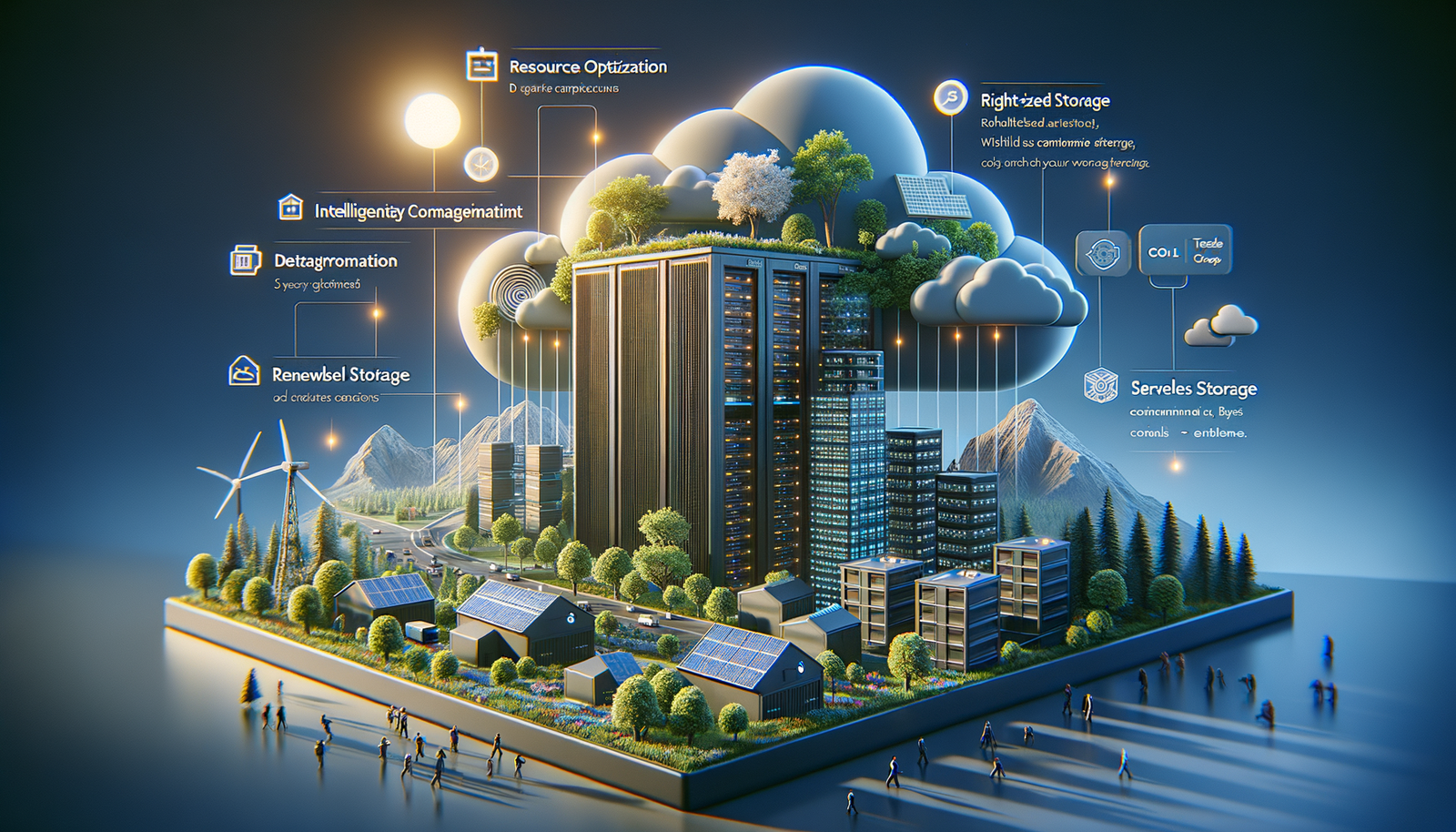
The Pillars of Green Cloud Architecture
A truly sustainable cloud architecture rests on three core pillars: resource optimization, intelligent data management, and renewable energy alignment. For data engineers and architects, this translates to designing systems that inherently consume less power while delivering uncompromised performance.
The first pillar, resource optimization, focuses on using only the compute and storage resources you need. This begins with rightsizing instances and employing auto-scaling to match workload demand, eliminating wasteful idle capacity. For data pipelines, consider serverless options like AWS Lambda or Azure Functions for event-driven processing, which consume energy only during execution. Containerization with Kubernetes allows for efficient bin-packing of workloads onto shared nodes. Implementing a robust cloud backup solution is critical here, but it must be designed sustainably. Instead of continuous full backups, use incremental or differential strategies. For example, a scheduled AWS EBS snapshot policy for a database might only capture changed blocks:
aws ec2 create-snapshot --volume-id vol-12345 --description "Incremental DB Backup - $(date)"
The measurable benefit is direct: reducing unnecessary compute hours and storage IOPS can lower energy consumption by 20-30% for variable workloads.
The second pillar is intelligent data management. Data has a carbon footprint, from the energy used to store it to the compute required to process it. Implementing data lifecycle policies is non-negotiable. Automate the tiering of infrequently accessed data from high-performance SSD storage to colder, more energy-efficient archival tiers like Amazon S3 Glacier or Azure Archive Storage. Choosing the best cloud storage solution for each data class is key. For your active data lake, use object storage with intelligent tiering rules. For analytics, leverage columnar formats like Parquet which compress efficiently, reducing the amount of data scanned and the compute needed. A simple PySpark job configuration highlights this:
spark.conf.set("spark.sql.parquet.filterPushdown", "true")
df.write.parquet("s3a://data-lake/table/", compression='snappy')
This reduces data processing volume, directly cutting the energy required for CPU cycles. Furthermore, clean up redundant, obsolete, and trivial (ROT) data. A mature crm cloud solution, for instance, should automatically archive closed opportunity records after a compliance period, minimizing its active storage footprint and energy draw.
The final pillar is renewable energy alignment. While largely dependent on the cloud provider, you can architect for it. Choose regions where the provider has a high percentage of renewable energy powering their grids. Schedule high-intensity batch processing jobs, like large-scale model training or ETL, to run during periods of high renewable availability in that region. Tools like AWS Customer Carbon Footprint Tool or Google Cloud’s Carbon Sense suite provide the data needed to make these scheduling decisions. The benefit is a lower carbon intensity per workload, even if the total energy use is the same.
By integrating these pillars—rightsizing resources, managing data with its energy cost in mind, and aligning operations with cleaner energy—you build an architecture that is both performant and inherently sustainable. The result is a direct reduction in operational costs and a significant decrease in the environmental impact of your digital services.
Defining a Sustainable cloud solution
A sustainable cloud solution is one designed to minimize environmental impact while maintaining performance and cost-efficiency. This involves architecting systems for energy efficiency, resource optimization, and carbon-aware computing. The goal is to deliver the required service—be it a cloud backup solution, a data analytics pipeline, or a CRM cloud solution—using the least possible energy and embodied carbon from hardware.
The foundation lies in selecting the right services and configuring them intelligently. For storage, choosing a best cloud storage solution means matching data access patterns to storage tiers. For example, instead of keeping all backup data on high-performance, energy-intensive storage, implement a lifecycle policy that automatically archives older backups to colder, greener storage classes. Here is a conceptual policy using AWS S3 Lifecycle configuration, which reduces the energy footprint of your cloud backup solution by moving infrequently accessed data to lower-power storage tiers.
aws s3api put-bucket-lifecycle-configuration \
  --bucket my-green-backups \
  --lifecycle-configuration '{
    "Rules": [{
      "ID": "ArchiveToGlacier",
      "Status": "Enabled",
      "Prefix": "archive/",
      "Transitions": [{
        "Days": 30,
        "StorageClass": "GLACIER"
      }]
    }]
  }'
Measurable Benefit: This can reduce storage-related carbon emissions by up to 80% for archival data compared to standard storage.
For compute, sustainability is achieved through auto-scaling and serverless architectures. Instead of running virtual machines at constant, low utilization, leverage managed services that scale to zero. For instance, a data pipeline can be built using serverless functions (AWS Lambda, Azure Functions) triggered only when new data arrives, and a CRM cloud solution can utilize autoscaling groups that dynamically add or remove instances based on real-time user load. This eliminates idle resource consumption.
Step-by-Step: Implementing a Carbon-Aware Batch Schedule.
1. Identify non-critical data processing jobs (like nightly model training or report generation).
2. Schedule these jobs to run in regions and time windows when the grid is powered by a higher percentage of renewable energy.
3. Use an API like Electricity Maps or WattTime to programmatically determine the optimal time to trigger your workload.
4. Integrate this logic into your workflow orchestrator (e.g., Apache Airflow).
Example Airflow DAG Snippet (Conceptual):
def get_greenest_hour(**context):
    # Call carbon intensity API
    forecast = call_carbon_intensity_api(region='west-us')
    return min(forecast, key=lambda x: x['carbon_intensity'])['hour']

start_time = PythonOperator(
    task_id='calculate_green_time',
    python_callable=get_greenest_hour,
    provide_context=True
)
Measurable Benefit: Shifting a 10-hour batch job to a greener time window can reduce its associated carbon emissions by over 30%, depending on the local energy grid.
Ultimately, a sustainable architecture is a byproduct of meticulous optimization. It requires measuring your workloads’ energy use via cloud provider tools (like AWS Customer Carbon Footprint Tool), right-sizing every resource, and continuously refining. By applying these principles, you build not just a best cloud storage solution for cost, but the best one for the planet.
Core Principles: Efficiency, Renewable Energy, and Circularity

Building a sustainable cloud architecture rests on three pillars: maximizing computational Efficiency, powering operations with Renewable Energy, and embracing Circularity in resource use. For data engineers and IT architects, this translates into designing systems that do more with less, leverage green energy sources, and minimize waste throughout the asset lifecycle.
Achieving Efficiency starts at the code and infrastructure level. A primary tactic is implementing intelligent auto-scaling to match compute resources precisely to workload demand, avoiding the energy drain of idle servers. For data pipelines, this means moving from fixed-size clusters to serverless or containerized solutions. Consider a batch data processing job. Instead of a perpetually running VM, you can orchestrate it with Kubernetes to spin up pods only when needed.
Example: Kubernetes CronJob for Efficient Batch Processing
apiVersion: batch/v1
kind: CronJob
metadata:
  name: nightly-data-transform
spec:
  schedule: "0 2 * * *" # Runs at 2 AM daily
  jobTemplate:
    spec:
      template:
        spec:
          containers:
          - name: spark-job
            image: company/spark:latest
            resources:
              requests:
                memory: "4Gi"
                cpu: "2"
          restartPolicy: Never
This ensures compute resources exist solely for the job’s duration, potentially cutting energy use by over 70% for intermittent workloads. This efficient design is crucial when selecting a cloud backup solution; incremental backups coupled with policy-driven storage tiering (moving old backups to colder, less energy-intensive storage classes) prevent unnecessary data processing and storage sprawl.
Powering these efficient operations with Renewable Energy is the next critical step. The major cloud providers offer tools to influence workload placement. Google Cloud’s carbon-free energy percentage by region or Azure’s Carbon Emission data in the Sustainability API allow architects to make informed decisions. A practical step is to schedule non-urgent, large-scale data jobs to run in regions and time windows with the highest renewable energy availability. For instance, a machine learning training job could be configured to start only when the grid’s renewable mix is above 80%.
Finally, Circularity addresses the full lifecycle of digital assets. This involves designing for durability, reusability, and responsible decommissioning. In data engineering, circularity means implementing robust data lifecycle policies. Raw data is ingested, transformed into analytical models, archived, and finally purged according to business rules, ensuring storage resources are not wasted on obsolete information. This principle directly informs the choice of a best cloud storage solution, favoring those with automated lifecycle policies that transition data from high-performance tiers to archival storage, and eventually to deletion, thus continuously reclaiming resources.
Actionable Step: Implement a Data Lifecycle Policy in AWS S3
1. Define your data stages: hot (frequent access), cool (infrequent access), archive (rare access), expire.
2. Create an S3 Lifecycle configuration rule in Terraform or the console.
3. Apply rules based on object tags or prefixes. For example, move raw-logs/ to Glacier Deep Archive after 30 days and expire after 7 years.
Applying circular thinking to software, teams should design modular, reusable components. A well-architected microservice for customer data ingestion, for instance, can serve as a foundational block for multiple analytics platforms and even the organization’s core crm cloud solution, preventing redundant development and the associated embodied carbon from extra compute cycles. By weaving efficiency, renewable energy, and circularity into the fabric of cloud design, we build systems that are not only technically superior but also environmentally responsible.
Designing Eco-Friendly Cloud Solutions
A core principle of green cloud architecture is right-sizing resources. Over-provisioned virtual machines waste energy and money. Start by implementing automated scaling policies. For instance, using AWS Auto Scaling or Kubernetes Horizontal Pod Autoscaler ensures your application uses only the compute power it needs, scaling down during off-peak hours. This directly reduces the carbon footprint of your underlying data center.
Selecting the best cloud storage solution is critical. Object storage tiers (like S3 Intelligent-Tiering or Azure Cool/Archive storage) automatically move infrequently accessed data to lower-energy storage classes. For a data engineering pipeline, you can implement lifecycle rules via Terraform:
resource "aws_s3_bucket_lifecycle_configuration" "example" {
  bucket = aws_s3_bucket.data_lake.id

  rule {
    id = "transition_to_glacier"
    status = "Enabled"
    transition {
      days          = 90
      storage_class = "GLACIER"
    }
  }
}
This code automatically transitions old log files to a more energy-efficient archival tier after 90 days, cutting storage energy use by up to 80%.
When designing a cloud backup solution, move beyond simple full backups. Implement incremental-forever backups coupled with deduplication. This minimizes the total data volume requiring storage and transfer, thereby reducing network energy consumption. Tools like Veeam or cloud-native services like Azure Backup use this methodology. The measurable benefit is a 50-70% reduction in backup storage footprint and associated energy for powering and cooling those disks.
Integrating sustainability into a CRM cloud solution involves optimizing data workflows. A common inefficiency is running nightly batch jobs that process all customer records. By shifting to an event-driven architecture using serverless functions (e.g., AWS Lambda), you process only the data that has changed. This slashes compute runtime. For example, instead of a nightly 2-hour ETL job, a Lambda function triggered by a database change stream processes updates in near-real-time, using seconds of compute time. The result is a direct, measurable drop in energy consumption per transaction.
Data processing choices have a major impact. Favor columnar storage formats (Parquet, ORC) over row-based formats (CSV, JSON) for analytics. They compress better, requiring less storage and significantly less energy for I/O operations during query execution. In a BigQuery or Snowflake environment, this translates to fewer bytes scanned and lower compute slots utilized, directly correlating to reduced energy use.
Finally, adopt a green coding mindset. Optimize algorithms for efficiency, clean up unused cloud resources (orphaned disks, idle instances), and consolidate databases. Use monitoring tools like the AWS Customer Carbon Footprint Tool or Google Cloud’s Carbon Sense suite to track your progress. The cumulative effect of these technical decisions—from storage tiers to serverless triggers—builds a truly eco-friendly cloud architecture that is both cost-effective and sustainable.
Optimizing Workload Placement and Resource Allocation
Effective cloud sustainability begins with intelligent workload placement and precise resource allocation. This involves strategically deploying applications and data across regions, zones, and instance types to minimize energy consumption and carbon footprint, while ensuring performance. The core principle is to right-size resources and leverage the cloud’s elasticity to match demand precisely, avoiding over-provisioning.
A foundational step is analyzing workload patterns. For batch data processing jobs, such as nightly ETL pipelines, you can schedule them to run in carbon-aware regions. Major providers offer carbon intensity data for their regions. Using this, you can programmatically select the least carbon-intensive region at execution time. For example, a Python script using a cloud SDK could query this data and launch resources accordingly:
import boto3
# Pseudo-logic: Fetch region carbon data (example using a hypothetical API or dataset)
green_regions = get_lowest_carbon_regions(['us-east-1', 'eu-west-1', 'us-west-2'])
client = boto3.client('ec2', region_name=green_regions[0])
# Launch instance in the selected region
For persistent services, auto-scaling is non-negotiable. Combine horizontal pod autoscaling in Kubernetes with cluster autoscaling to ensure nodes are only active when needed. Similarly, for storage, implementing intelligent tiering policies is a best cloud storage solution practice. Move infrequently accessed data from high-performance tiers to archival storage automatically, which uses less energy. This is crucial for managing the data lake that feeds your analytics, ensuring only hot data resides on power-intensive SSDs.
Consider your cloud backup solution. Instead of daily full backups, implement incremental-forever backups coupled with deduplication. This drastically reduces the storage volume and subsequent processing energy required. A tool like Restic or cloud-native backup services can achieve this, minimizing the storage footprint and the energy for data transfer.
Resource allocation extends to application design. For a CRM cloud solution, leverage serverless functions (AWS Lambda, Azure Functions) for event-driven processes like sending follow-up emails or updating lead scores. This ensures compute resources are consumed only for the milliseconds of execution, eliminating idle resource waste. Combine this with a managed database that offers automatic scaling, like Amazon Aurora Serverless.
Actionable Steps:
* Measure and iterate: Implement monitoring with tools like CloudWatch or Prometheus to track metrics such as CPU utilization, memory pressure, and carbon emissions estimates (if available). Set alerts for low utilization, indicating potential downsizing opportunities.
* Consolidate workloads: Use containerization to pack multiple applications onto shared hardware, increasing density and utilization. Orchestrate with Kubernetes to bin-pack pods efficiently across nodes.
* Shut down development environments: Automate the shutdown of non-production resources, like development and testing clusters, during nights and weekends using cron jobs or scheduler tools.
The measurable benefits are substantial: typical right-sizing can reduce compute costs and associated energy by 20-30%. Intelligent storage tiering can cut storage costs by up to 70%, directly correlating to lower energy use in data centers. By making workload placement and resource allocation dynamic and data-driven, you build a system that is not only cost-effective but inherently sustainable.
Leveraging Serverless and Containerized Architectures
A core strategy for reducing the carbon footprint of cloud operations involves shifting from perpetually running virtual machines to more dynamic, event-driven compute models. Serverless architectures, like AWS Lambda or Azure Functions, epitomize this by executing code only in response to triggers, eliminating idle resource consumption. For instance, a data pipeline that processes nightly sales reports can be built entirely serverless. The arrival of a new file in a best cloud storage solution like Amazon S3 triggers a Lambda function. This function transforms the data and loads it into a data warehouse, with compute resources scaling to zero when the job finishes. This model directly translates to energy savings, as you are billed—and the cloud provider powers hardware—only for the milliseconds of execution time.
- Example: Serverless Data Transformation
Trigger: A newsales.csvfile is uploaded to an S3 bucket.
Action: An AWS Lambda function written in Python is invoked.
import boto3
import pandas as pd
from io import StringIO

s3_client = boto3.client('s3')
def lambda_handler(event, context):
    # Get the uploaded file details
    bucket = event['Records'][0]['s3']['bucket']['name']
    key = event['Records'][0]['s3']['object']['key']

    # Read the CSV directly from S3
    csv_obj = s3_client.get_object(Bucket=bucket, Key=key)
    df = pd.read_csv(StringIO(csv_obj['Body'].read().decode('utf-8')))

    # Perform transformation (e.g., currency conversion)
    df['revenue_usd'] = df['revenue_local'] * get_exchange_rate()

    # Save processed data to a new location
    processed_key = f"processed/{key}"
    csv_buffer = StringIO()
    df.to_csv(csv_buffer, index=False)
    s3_client.put_object(Bucket=bucket, Key=processed_key, Body=csv_buffer.getvalue())
Benefit: Zero energy waste from idle servers; compute scales precisely with workload.
For more complex, long-running applications requiring specific runtimes or libraries, containerized architectures with orchestration platforms like Kubernetes provide superior efficiency over traditional VMs. Containers package an application with all its dependencies, ensuring consistency and enabling high-density deployment on shared hosts. By using Kubernetes’ Horizontal Pod Autoscaler, the number of container instances automatically scales with demand, right-sizing resource allocation. This maximizes hardware utilization in your cluster, a key metric for sustainability. A practical application is containerizing an analytics dashboard that experiences predictable daily peaks. The autoscaler adds pods during business hours and scales down at night, reducing the underlying node count and energy draw.
Integrating these architectures with a robust cloud backup solution and a best cloud storage solution is crucial for a holistic green strategy. For example, backing up a containerized application’s stateful data can leverage object storage’s lifecycle policies to automatically transition infrequently accessed backups to colder, more energy-efficient storage tiers. Similarly, a crm cloud solution built on microservices can deploy non-critical background jobs (like email digest generation) as serverless functions, while core user-facing services run in an auto-scaled Kubernetes cluster. This hybrid approach ensures performance while minimizing the total active compute footprint. The measurable outcome is a direct reduction in your cloud provider’s Power Usage Effectiveness (PUE) contribution, as you are demanding fewer active physical resources over time, allowing data centers to consolidate workloads and improve overall energy efficiency.
Measuring and Managing Your Cloud Carbon Footprint
To effectively reduce your environmental impact, you must first establish a baseline by measuring your cloud carbon footprint. This involves quantifying the emissions from compute, storage, and data transfer across your services. A foundational step is to leverage cloud provider tools like the AWS Customer Carbon Footprint Tool, Google Cloud’s Carbon Footprint, or Microsoft Emissions Impact Dashboard. These tools translate your resource usage—measured in kilowatt-hours—into carbon dioxide equivalent (CO2e) based on the grid energy mix of the regions you operate in.
For a more granular, application-level view, you can integrate third-party libraries. For instance, using the open-source Cloud Carbon Footprint tool, you can pull data via cloud APIs. Here’s a conceptual Python snippet using the AWS Cost and Usage Report to estimate compute emissions:
import pandas as pd
# Pseudo-logic for estimation
def estimate_ec2_emissions(instance_hours, instance_type, region):
    # Fetch region-specific energy coefficient (kgCO2e/kWh)
    region_coefficient = get_grid_intensity(region)
    # Get instance power draw (kW) from a reference database
    instance_power = get_power_usage(instance_type)
    emissions = instance_hours * instance_power * region_coefficient
    return emissions
Managing this footprint requires architectural optimizations. Start with right-sizing: continuously monitor and adjust instance types to match workload requirements, eliminating over-provisioned resources. Implement auto-scaling to ensure you’re only consuming energy during peak demand. For storage, selecting the best cloud storage solution is critical. Move infrequently accessed data from standard tiers to cold storage or archive classes, which use less energy-intensive hardware. When designing a cloud backup solution, apply lifecycle policies to automatically transition backups to lower-tier storage after a set period, significantly cutting storage-related emissions.
Data management plays a huge role. A fragmented data landscape with redundant datasets wastes storage and compute. Consolidate your data lakes and warehouses. For example, schedule and automate the shutdown of development environments during nights and weekends. Consider this Terraform snippet for an auto-scaling policy:
resource "aws_autoscaling_schedule" "scale_down" {
  scheduled_action_name  = "scale_down_nights"
  min_size               = 0
  max_size               = 0
  desired_capacity       = 0
  recurrence             = "0 18 * * *" # Shut down at 6 PM daily
}
The measurable benefits are direct: reducing compute hours by 30% through right-sizing can lead to a proportional drop in associated emissions. Furthermore, optimizing your CRM cloud solution by cleaning duplicate records and archiving old interaction logs can reduce the database load and required storage, contributing to a lower carbon footprint. Ultimately, integrating these metrics into your DevOps dashboards makes carbon a first-class KPI, alongside performance and cost, driving sustainable innovation.
Tools and Methodologies for Carbon Accounting
To effectively measure and reduce the environmental impact of cloud operations, a robust carbon accounting framework is essential. This process involves quantifying greenhouse gas emissions from compute, storage, and network resources. A foundational methodology is the cloud carbon footprint model, which translates cloud service usage into estimated carbon emissions using factors like energy consumption and grid carbon intensity.
The first step is instrumentation and data collection. Cloud providers offer tools like AWS Customer Carbon Footprint Tool, Google Cloud’s Carbon Sense Suite, and Microsoft Azure Emissions Impact Dashboard. These tools aggregate billing and usage data, which is the primary input for calculations. For a more granular, custom analysis, you can export detailed usage reports (e.g., AWS Cost and Usage Reports) and process them with data pipelines. For instance, to assess your best cloud storage solution, you need to analyze metrics like gigabyte-hours for different storage classes (Standard, Infrequent Access, Archive). Lower access tiers generally have a lower carbon footprint due to powered-down infrastructure.
Here is a simplified Python example using the pandas library to calculate compute emissions from a usage report:
import pandas as pd
# Assume a CSV with columns: instance_type, vcpu_hours, region
df = pd.read_csv('cloud_usage.csv')
# Define emission factors (kgCO2e per vCPU-hour) per region
emission_factors = {'us-east-1': 0.00012, 'eu-west-1': 0.00005}
def calculate_emissions(row):
    return row['vcpu_hours'] * emission_factors.get(row['region'], 0.0001)
df['estimated_emissions_kgCO2e'] = df.apply(calculate_emissions, axis=1)
total_emissions = df['estimated_emissions_kgCO2e'].sum()
print(f"Total Compute Emissions: {total_emissions:.2f} kgCO2e")
A key actionable insight is architecting for efficiency. This includes:
* Right-sizing instances: Use monitoring tools to eliminate underutilized VMs, directly cutting energy use.
* Optimizing data lifecycle: Automate moving cold data to archival storage, a critical practice for any cloud backup solution, to reduce the active storage footprint.
* Leveraging managed services: Serverless platforms and managed databases (like Amazon Aurora or Google BigQuery) typically operate with higher resource efficiency than self-managed counterparts.
Integrating these metrics into a crm cloud solution or other business platforms can drive accountability. For example, you can tag resources by department or project, allocate emissions, and display dashboards alongside performance KPIs. The measurable benefits are clear: companies implementing systematic carbon accounting often achieve 10-30% reductions in cloud-related emissions within the first year through visibility alone, leading to significant cost savings. Ultimately, treating carbon as a measurable metric is as crucial as monitoring latency or cost, embedding sustainability into the core of IT operations.
Implementing a Sustainable Cloud Solution Governance Model
A sustainable cloud governance model embeds environmental accountability into every operational layer, from resource provisioning to data lifecycle management. This requires codifying policies that prioritize energy efficiency and carbon-aware computing. Start by establishing a Green Policy as Code framework using infrastructure as code (IaC) tools like Terraform or AWS CloudFormation. This allows you to define and enforce sustainable configurations automatically.
For instance, implement automated scheduling to power down non-production environments during off-hours. Below is a simplified AWS Lambda function triggered by Amazon EventBridge to stop EC2 instances in a development environment.
import boto3

def lambda_handler(event, context):
    ec2 = boto3.client('ec2')
    # Filter instances by tag 'Environment: Dev'
    instances = ec2.describe_instances(
        Filters=[{'Name': 'tag:Environment', 'Values': ['Dev']}]
    )
    instance_ids = [i['InstanceId'] for r in instances['Reservations'] for i in r['Instances']]
    if instance_ids:
        ec2.stop_instances(InstanceIds=instance_ids)
        print(f'Stopped instances: {instance_ids}')
    return {'statusCode': 200}
Data storage and management are critical levers. Your best cloud storage solution strategy must align data tiers with access patterns. Move cold data from standard block storage to ultra-low-power archival tiers like Amazon S3 Glacier or Azure Archive Storage. Implement lifecycle policies to automate this. For a holistic cloud backup solution, leverage incremental forever backups and deduplication to minimize storage footprint and the energy required for data transfers. A measurable benefit is a 40-60% reduction in storage-related energy costs by actively tiering data.
Integrate sustainability metrics into your monitoring dashboards. Use cloud provider tools like AWS Customer Carbon Footprint Tool or Google Cloud’s Carbon Sense suite. Track key performance indicators (KPIs) such as:
* Carbon Intensity: Grams of CO2e per compute hour.
* Resource Utilization: Aim for high CPU/memory usage via efficient scaling.
* Data Transfer Volume: Minimize cross-region data movement, which increases energy use.
Governance extends to SaaS platforms. When selecting a crm cloud solution, evaluate vendors on their public sustainability commitments, data center energy sources, and API efficiency. Opt for platforms that offer granular control over data processing and storage regions, allowing you to align with greener geographical grids.
Finally, establish a continuous feedback loop:
1. Measure using the integrated carbon dashboards.
2. Analyze reports to identify high-impact services (e.g., underutilized databases).
3. Act by right-sizing instances, deleting orphaned storage, and refining auto-scaling rules.
4. Optimize architecture by adopting managed services and serverless computing (e.g., AWS Lambda, Azure Functions), which inherently improve resource utilization.
This model transforms sustainability from an abstract goal into a measurable, automated engineering discipline, reducing operational costs and environmental impact simultaneously.
Conclusion: The Future of Sustainable Cloud Computing
The trajectory of sustainable cloud computing is clear: it will evolve from a cost-centric initiative to a core architectural principle, deeply integrated into every layer of IT operations. For data engineers and architects, this means sustainability metrics will join performance, security, and cost as a first-class design constraint. The future lies in intelligent, automated systems that dynamically optimize for carbon efficiency without sacrificing reliability.
A foundational step is implementing a cloud backup solution that prioritizes energy-aware data lifecycle management. Instead of indefinite retention, engineers can architect automated tiering and deletion policies. For example, using AWS S3 Lifecycle policies with Glacier Deep Archive for cold backups reduces the energy footprint of constantly spinning storage. Consider this policy defined via Terraform:
resource "aws_s3_bucket_lifecycle_configuration" "sustainable_backup" {
  bucket = aws_s3_bucket.backup.id
  rule {
    id = "TierToGlacier"
    status = "Enabled"
    transition {
      days          = 90
      storage_class = "GLACIER"
    }
    expiration {
      days = 730 # Auto-delete after 2 years
    }
  }
}
This approach transforms a standard cloud backup solution into a sustainable one, potentially cutting storage-related emissions by over 70% for archival data.
Selecting the best cloud storage solution now requires evaluating its carbon intensity alongside IOPS and latency. The future points to leveraging region-specific carbon data to guide placement. Tools like the Cloud Carbon Footprint SDK allow engineers to programmatically select regions powered by higher renewable energy percentages. A practical step is to integrate this into CI/CD pipelines for infrastructure deployment, ensuring new resources are provisioned in the greenest available zone. The measurable benefit is direct: running a compute-intensive workload in a region like Google Cloud’s europe-west1 (Finland) versus us-east1 (Virginia) can reduce its carbon footprint by approximately 80%, based on grid carbon intensity.
Furthermore, application sustainability extends to SaaS layers. Adopting a consolidated CRM cloud solution that operates on a shared, hyper-efficient multi-tenant architecture eliminates the need for energy-draining, on-premise servers and redundant data silos. The measurable benefit here is the aggregation effect: a single, optimized data center serving millions of users is inherently more energy-efficient per transaction than thousands of disparate systems.
Actionable steps for teams to adopt now:
* Instrument Everything: Embed carbon cost tracking into monitoring dashboards (e.g., Grafana) alongside CPU and memory.
* Right-Size Aggressively: Implement automated scaling policies that use metrics like query queue length to scale down during off-peak hours, not just scale up.
* Architect for Efficiency: Favor serverless and managed services (e.g., AWS Lambda, BigQuery) which benefit from massive, Google-scale hardware optimization you cannot replicate privately.
Ultimately, the sustainable cloud is a data-driven cloud. By treating carbon as a metric to be optimized, engineering teams can build systems that are not only robust and cost-effective but also fundamentally responsible. The tools and data are available; the next step is to weave them into the very fabric of our architectures.
The Business Case for Green Cloud Solutions
Adopting green cloud architectures is no longer just an environmental statement; it’s a strategic business imperative that directly impacts operational efficiency, cost management, and brand reputation. The core principle is doing more with less—optimizing resource utilization to reduce energy consumption and carbon footprint while maintaining or improving performance. This creates a powerful business case centered on cost reduction, risk mitigation, and competitive advantage.
A foundational step is implementing a data lifecycle management strategy. Storing infrequently accessed „cold” data on high-performance, energy-intensive tiers is wasteful. By classifying data and automatically archiving it to lower-energy storage solutions, companies can significantly cut costs and energy use. For instance, a robust cloud backup solution for long-term archives can leverage cold storage classes. Consider this AWS CLI command to transition objects in an S3 bucket to the INFREQUENT_ACCESS tier after 30 days, reducing storage costs and the underlying energy footprint:
aws s3api put-bucket-lifecycle-configuration --bucket my-data-lake --lifecycle-configuration '{"Rules": [{"Status": "Enabled", "Filter": {"Prefix": "archive/"}, "Transitions": [{"Days": 30, "StorageClass": "STANDARD_IA"}], "ID": "MoveToIA"}]}'
The choice of your primary best cloud storage solution should also factor in sustainability. Providers now offer carbon footprint dashboards and region-specific data based on grid energy sources. Opting for a region powered by renewable energy for your core workloads is a direct, impactful decision. Measurable benefits include a quantifiable reduction in Scope 3 emissions reported in your ESG (Environmental, Social, and Governance) disclosures, alongside lower data storage expenses.
Beyond storage, application architecture plays a crucial role. Implementing auto-scaling ensures compute resources dynamically match demand, preventing energy waste from idle servers. For a data pipeline, this means clusters spin up for a transformation job and terminate immediately after. In Kubernetes, you can configure a HorizontalPodAutoscaler (HPA) to achieve this:
apiVersion: autoscaling/v2
kind: HorizontalPodAutoscaler
metadata:
  name: data-processor-hpa
spec:
  scaleTargetRef:
    apiVersion: apps/v1
    kind: Deployment
    name: data-processor
  minReplicas: 2
  maxReplicas: 10
  metrics:
  - type: Resource
    resource:
      name: cpu
      target:
        type: Utilization
        averageUtilization: 70
This ensures pods scale based on CPU utilization, maintaining efficiency. Furthermore, software choices matter. Optimizing code and selecting efficient algorithms reduce required compute time, creating a cascade of energy savings.
These principles extend to all SaaS layers. When selecting a CRM cloud solution, evaluate the vendor’s sustainability commitments and architecture. A CRM built on a green cloud provider and designed for multi-tenancy efficiency contributes to your indirect emission reductions. The measurable business benefits are clear:
* Direct Cost Savings: Lower energy and resource bills from optimized storage and compute.
* Enhanced Compliance: Proactively meeting evolving environmental regulations and carbon tax frameworks.
* Brand Value: Attracting eco-conscious customers and talent by demonstrating tangible sustainability action.
* Future-Proofing: Building resilient, efficient systems less vulnerable to energy price volatility.
By embedding these green architectural practices, data and IT teams transform sustainability from a reporting exercise into a core driver of innovation and financial performance.
Key Takeaways and Actionable Next Steps
To operationalize cloud sustainability, focus on architectural patterns that reduce energy consumption and carbon emissions. This involves optimizing data storage, compute resource management, and leveraging automation. The principles of a green architecture—such as right-sizing, serverless computing, and intelligent data lifecycle management—directly translate into cost savings and a reduced environmental footprint. Implementing these patterns requires a shift in how we provision and manage resources, from development through to production.
A foundational step is to audit and optimize your data storage strategy. Not all data needs high-performance, always-available storage. By implementing automated data tiering policies, you can move cold data to more energy-efficient storage classes. This makes your setup not only an eco-friendly cloud backup solution but also a cost-effective best cloud storage solution. For example, using AWS S3 Intelligent-Tiering or Google Cloud Storage’s Autoclass can be configured via infrastructure-as-code.
Example Terraform snippet for AWS S3 lifecycle policy:
resource "aws_s3_bucket_lifecycle_configuration" "eco_bucket" {
  bucket = aws_s3_bucket.data_lake.id

  rule {
    id = "MoveToGlacier"
    status = "Enabled"
    transition {
      days          = 90
      storage_class = "GLACIER"
    }
    filter {}
  }
}
The measurable benefit is a 50-70% reduction in storage costs for archival data, which correlates directly with lower energy use in data centers.
Next, tackle compute sustainability. Right-sizing virtual machines is critical; consistently over-provisioned VMs waste significant energy. Utilize cloud monitoring tools to analyze CPU utilization and downsize instances accordingly. Furthermore, adopt serverless and containerized workloads (e.g., AWS Lambda, Google Cloud Run) which inherently promote higher resource utilization at the platform level. For batch data pipelines, implement auto-scaling on Kubernetes clusters or use managed services like AWS Fargate to ensure resources are only active when processing jobs.
Your Immediate Action Plan:
1. Profile your workloads for a week using cloud provider cost and usage reports.
2. Identify underutilized resources (e.g., VMs with <20% average CPU use).
3. Implement a scaling schedule for non-critical environments, shutting down development clusters at night and on weekends.
4. Migrate eligible applications to serverless functions, starting with event-driven data processing tasks.
These actions can lead to a 20-40% reduction in compute costs and associated carbon emissions.
Finally, integrate sustainability metrics into your DevOps and business intelligence workflows. This means treating carbon efficiency as a KPI alongside performance and cost. Tools like the Cloud Carbon Footprint open-source tool can be integrated into your monitoring dashboards. Furthermore, evaluate the sustainability of your SaaS tools; choosing a CRM cloud solution that publishes its carbon footprint and runs on renewable energy can significantly impact your Scope 3 emissions. Advocate for and select vendors with transparent sustainability commitments.
Summary
Sustainable cloud architecture is built on resource optimization, intelligent data management, and renewable energy alignment. By rightsizing compute, implementing a smart cloud backup solution with tiered storage, and selecting the best cloud storage solution for each data class, organizations can drastically reduce energy consumption. Furthermore, integrating these principles into application design, such as optimizing a CRM cloud solution with serverless functions, ensures efficiency is woven into every digital service. The result is a powerful synergy of cost reduction, compliance readiness, and a significantly lowered environmental footprint.