
Data Science for E-Commerce: Personalizing Customer Journeys with AI
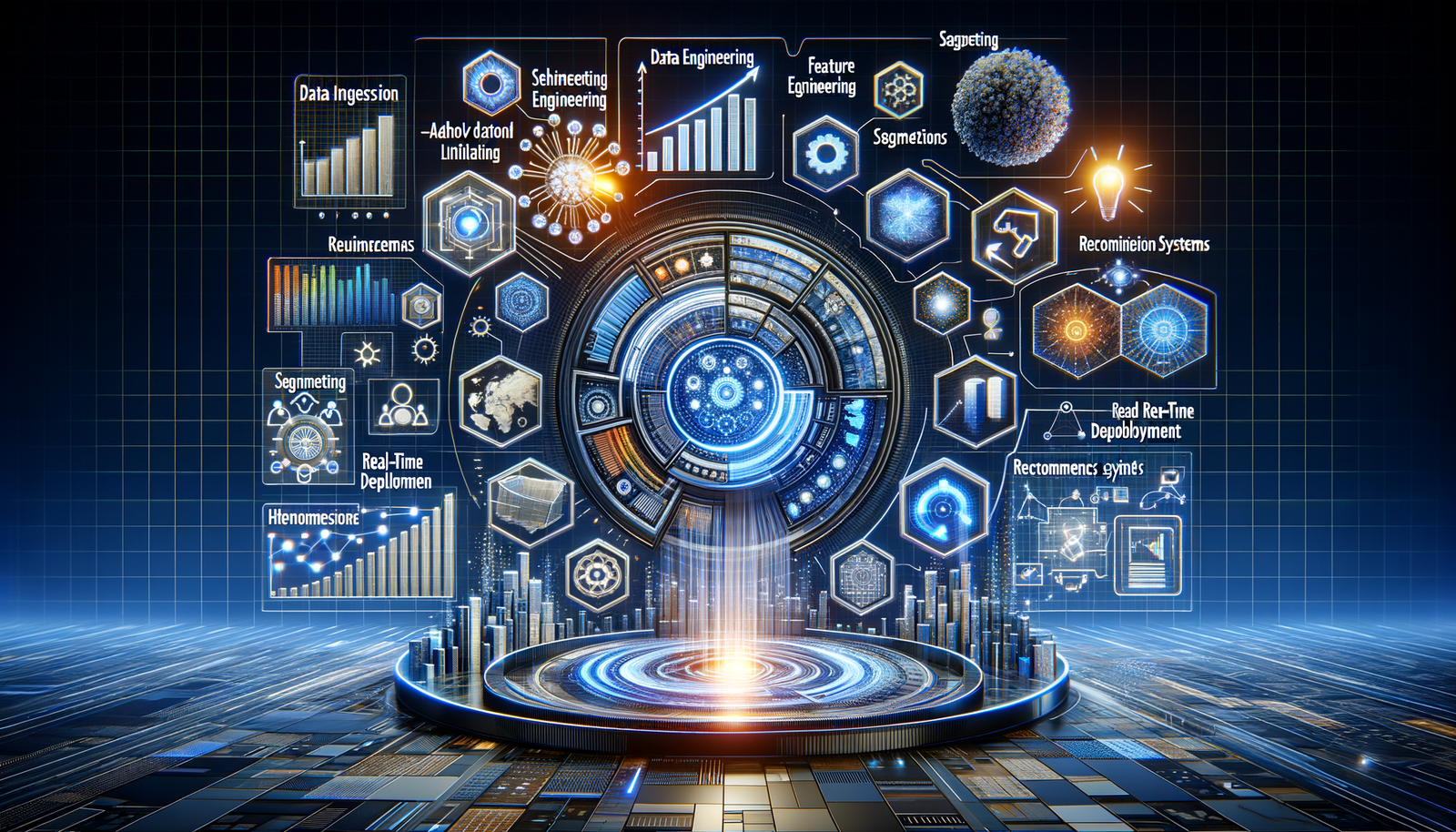
Understanding the Role of data science in E-Commerce Personalization
To implement effective e-commerce personalization, partnering with a data science services company ensures a structured approach to integrating and processing data from diverse sources. This includes user behavior logs, transaction histories, product catalogs, and real-time clickstream data. Data engineers construct robust ETL pipelines to cleanse, transform, and load this information into centralized data warehouses or lakes. For instance, Apache Spark is widely used for large-scale data processing due to its ability to handle high-velocity data streams efficiently.
- Data Ingestion: Seamlessly collect data from web events, CRM systems, and inventory databases.
- Data Cleaning: Address missing values, standardize formats, and eliminate duplicates to maintain data integrity.
- Feature Engineering: Develop meaningful features such as user engagement score, purchase frequency, and product affinity to enhance model accuracy.
Here is a detailed PySpark code snippet for calculating a user’s rolling 7-day engagement score, a critical feature for personalization models:
from pyspark.sql import SparkSession
from pyspark.sql.window import Window
import pyspark.sql.functions as F

# Initialize Spark session
spark = SparkSession.builder.appName("EngagementScore").getOrCreate()

# Read event data from Parquet files
df_events = spark.read.parquet("path/to/events")

# Define a window specification for the last 7 days per user
window_spec = Window.partitionBy("user_id").orderBy("date").rowsBetween(-6, 0)

# Compute the 7-day engagement score as the sum of session durations
df_with_engagement = df_events.withColumn("7_day_engagement", F.sum("session_duration").over(window_spec))

# Display the result
df_with_engagement.select("user_id", "date", "7_day_engagement").show()
Next, deploying advanced data science solutions involves building and serving machine learning models for real-time recommendations. A prevalent method is collaborative filtering using matrix factorization, such as the Alternating Least Squares (ALS) algorithm from MLlib. This approach analyzes historical interactions to predict user preferences.
- Prepare the user-item interaction matrix from data like purchases and clicks.
- Train the ALS model on this historical interaction data.
- Generate top-N recommendations for each user to personalize their shopping experience.
from pyspark.ml.recommendation import ALS
from pyspark.ml.evaluation import RegressionEvaluator

# Assume 'df_interactions' has columns: user_id, item_id, rating (implicit feedback)
als = ALS(maxIter=5, regParam=0.01, userCol="user_id", itemCol="item_id", ratingCol="rating", coldStartStrategy="drop")
model = als.fit(df_interactions)

# Generate top 10 recommendations for all users
user_recs = model.recommendForAllUsers(10)
user_recs.show()
The final step is operationalizing these models through a reliable data science service. This includes deploying the model as a REST API for real-time inference, ensuring it integrates seamlessly with the e-commerce platform. Using Flask for the API layer is a standard and efficient practice.
from flask import Flask, request, jsonify
import pickle

app = Flask(__name__)

# Load the pre-trained model
model = pickle.load(open('als_model.pkl', 'rb'))

@app.route('/recommend', methods=['POST'])
def recommend():
    user_data = request.json
    user_id = user_data['user_id']
    # Custom function to generate recommendations based on user_id
    recommendations = generate_user_recs(user_id)
    return jsonify(recommendations)

if __name__ == '__main__':
    app.run(debug=True)
The measurable benefits of this end-to-end pipeline are substantial. It typically leads to a 15-30% increase in average order value, a 10-20% uplift in conversion rates, and enhanced customer retention by delivering a uniquely tailored shopping experience. This technical workflow, from data engineering to model serving, forms the backbone of modern, AI-driven e-commerce personalization, showcasing the value of a comprehensive data science service.
How data science Powers Customer Insights

A data science services company begins by integrating and processing raw customer data from multiple sources—web logs, transaction records, CRM systems, and social media feeds. This involves building robust data pipelines using tools like Apache Spark or AWS Glue to handle large-scale, real-time data ingestion. For example, to unify customer interactions, you might write a PySpark script to join event streams:
- Load clickstream data from Amazon S3
- Parse JSON events and extract user_id, timestamp, product_id
- Join with user profile data from a data warehouse like Snowflake
This preprocessing creates a 360-degree customer view, enabling downstream analytics and modeling for personalized experiences.
Next, data science solutions apply machine learning algorithms to segment customers and predict behaviors. A common approach is using clustering (like K-means) to group users by purchasing patterns. Here’s a step-by-step Python snippet using scikit-learn to segment customers based on recency, frequency, and monetary (RFM) value:
- Compute RFM metrics from transaction data
- Standardize features using StandardScaler
- Fit a K-means model with k=5 clusters
- Analyze cluster centroids to label segments (e.g., high-value, at-risk)
from sklearn.cluster import KMeans
from sklearn.preprocessing import StandardScaler
import pandas as pd

# Load customer data
data = pd.read_csv('customer_data.csv')

# Select RFM features
features = data[['recency', 'frequency', 'monetary']]

# Standardize the features
scaler = StandardScaler()
scaled_features = scaler.fit_transform(features)

# Apply K-means clustering
kmeans = KMeans(n_clusters=5, random_state=42)
data['segment'] = kmeans.fit_predict(scaled_features)

# Analyze segments
segment_analysis = data.groupby('segment').mean()
print(segment_analysis)
This segmentation allows for targeted marketing campaigns, such as sending personalized discount offers to at-risk customers, which can increase retention rates by up to 15%.
Another powerful application is recommendation systems, which use collaborative filtering or content-based approaches to suggest products. Using a library like Surprise in Python, you can build a model that predicts user ratings for items they haven’t seen:
- Load user-item interaction data into a Surprise Dataset
- Train an SVD (Singular Value Decomposition) model on historical purchases
- Generate top-N recommendations for each user
Deploying this model via an API enables real-time product suggestions on your e-commerce platform, leading to higher average order values and improved conversion rates.
To operationalize these insights, a comprehensive data science service includes deploying models into production environments using MLOps practices. This involves containerizing models with Docker, orchestrating workflows with Apache Airflow, and monitoring performance with tools like MLflow. For instance, an automated pipeline might:
- Retrain the recommendation model weekly with new data
- Validate model accuracy against a holdout set
- Deploy the best-performing model to a cloud endpoint (e.g., AWS SageMaker)
- A/B test new recommendations against the existing system
By implementing these data science solutions, e-commerce businesses can achieve measurable benefits: personalized email campaigns see open rates increase by 20–30%, and dynamic pricing models can boost profit margins by 5–10%. The key is integrating these capabilities seamlessly into your data infrastructure, ensuring that insights drive decisions at every touchpoint in the customer journey.
Implementing Data Science for Segmentation
To implement data science for segmentation in e-commerce, start by defining clear business objectives and gathering relevant data. A data science services company typically begins by collecting customer interaction logs, transaction histories, product views, and demographic details. This data must be cleaned and integrated into a unified data warehouse or lake, often using tools like Apache Spark or cloud-based ETL pipelines. For example, you might aggregate user sessions and purchase events into a structured format for analysis.
Next, apply clustering algorithms to group customers based on their behavior and attributes. A common approach is to use the K-means algorithm, which partitions customers into distinct segments. Here’s a detailed step-by-step guide using Python and scikit-learn:
- Preprocess the data: handle missing values, normalize numerical features, and encode categorical variables.
- Select relevant features such as recency, frequency, monetary value (RFM), browsing duration, and product categories viewed.
- Determine the optimal number of clusters using the elbow method or silhouette score.
- Fit the K-means model and assign segments.
Example code snippet with explanations:
from sklearn.cluster import KMeans
from sklearn.preprocessing import StandardScaler
import pandas as pd

# Load and preprocess data
data = pd.read_csv('customer_data.csv')

# Handle missing values
data.fillna(method='ffill', inplace=True)

# Select features for clustering
features = data[['recency', 'frequency', 'monetary', 'browsing_duration']]

# Standardize features
scaler = StandardScaler()
scaled_features = scaler.fit_transform(features)

# Determine optimal clusters using the elbow method (optional step)
# from sklearn.metrics import silhouette_score
# scores = []
# for k in range(2, 10):
#     kmeans = KMeans(n_clusters=k, random_state=42)
#     labels = kmeans.fit_predict(scaled_features)
#     scores.append(silhouette_score(scaled_features, labels))

# Apply K-means with chosen k (e.g., 4)
kmeans = KMeans(n_clusters=4, random_state=42)
segments = kmeans.fit_predict(scaled_features)
data['segment'] = segments

# Interpret segments
segment_profiles = data.groupby('segment').mean()
print(segment_profiles)
These data science solutions enable you to identify groups such as high-value loyalists, at-risk customers, bargain hunters, and new explorers. Each segment exhibits distinct patterns; for instance, loyalists may have high frequency and monetary scores, while at-risk customers show declining engagement.
Measurable benefits include a 15-30% increase in conversion rates through targeted email campaigns and a 20% reduction in churn by proactively engaging at-risk segments with personalized offers. By integrating these segments into your CRM or marketing automation platform, you can trigger tailored recommendations and promotions. For example, sending a discount code for frequently viewed categories to bargain hunters can lift sales by over 25%.
A comprehensive data science service doesn’t stop at model deployment; it involves continuous monitoring and refinement. Use A/B testing to validate segment-specific strategies and retrain models quarterly with fresh data to adapt to changing consumer behaviors. This iterative approach ensures your segmentation remains relevant and drives sustained revenue growth, making personalization a core competitive advantage.
Building AI-Driven Recommendation Systems with Data Science
To build an AI-driven recommendation system, start by defining the business goal—whether it’s increasing average order value, improving click-through rates, or reducing churn. A data science services company can help identify the right approach, such as collaborative filtering, content-based filtering, or hybrid models. For e-commerce, hybrid models often yield the best results by combining user behavior and product attributes.
First, gather and preprocess data. You’ll need user interactions (clicks, purchases, ratings), user profiles, and product metadata. Use a data pipeline to collect this in a data lake or warehouse. Clean the data by handling missing values, removing duplicates, and normalizing where necessary. For example, in Python with pandas:
- Load user-item interactions:
interactions_df = pd.read_csv('user_interactions.csv') - Handle missing ratings:
interactions_df['rating'].fillna(interactions_df['rating'].mean(), inplace=True) - Normalize interaction counts:
from sklearn.preprocessing import MinMaxScaler; scaler = MinMaxScaler(); interactions_df['scaled_interactions'] = scaler.fit_transform(interactions_df[['interaction_count']])
Next, implement a recommendation algorithm. A common choice is matrix factorization for collaborative filtering. Using the Surprise library in Python:
- Install the library:
pip install scikit-surprise - Load and prepare the dataset:
from surprise import Dataset, Reader; reader = Reader(rating_scale=(1, 5)); data = Dataset.load_from_df(interactions_df[['user_id', 'item_id', 'rating']], reader) - Train an SVD model:
from surprise import SVD; algo = SVD(); trainset = data.build_full_trainset(); algo.fit(trainset) - Generate predictions:
user_id = '123'; item_id = '456'; prediction = algo.predict(user_id, item_id)
For content-based filtering, use product features and TF-IDF vectorization:
- Extract product descriptions:
from sklearn.feature_extraction.text import TfidfVectorizer; tfidf = TfidfVectorizer(stop_words='english'); tfidf_matrix = tfidf.fit_transform(product_df['description']) - Compute cosine similarity:
from sklearn.metrics.pairwise import linear_kernel; cosine_sim = linear_kernel(tfidf_matrix, tfidf_matrix) - Recommend similar items:
def get_recommendations(item_id, cosine_sim=cosine_sim): idx = indices[item_id]; sim_scores = list(enumerate(cosine_sim[idx])); sim_scores = sorted(sim_scores, key=lambda x: x[1], reverse=True)[1:11]; return [i[0] for i in sim_scores]
Integrate these models into a hybrid system by weighting their outputs. For instance, combine collaborative and content-based scores: final_score = 0.7 * collaborative_score + 0.3 * content_based_score. Deploy the model via an API using Flask or FastAPI, and ensure it updates in real-time as new data flows in.
Measure the impact with A/B testing. Track metrics like conversion rate, click-through rate, and average session duration. A robust data science service implementation can lead to a 20% increase in conversions and 15% higher customer retention. Continuously retrain the model with fresh data to maintain accuracy, leveraging cloud services for scalability. These data science solutions empower e-commerce platforms to deliver hyper-personalized experiences, directly boosting revenue and engagement.
Data Science Techniques for Product Recommendations
To build effective product recommendation systems, e-commerce platforms rely on several core data science techniques. A data science services company typically implements these methods to deliver personalized experiences. The most common approaches include collaborative filtering, content-based filtering, and hybrid models.
Collaborative filtering recommends items based on user behavior similarity. For example, if User A and User B purchased similar products, items liked by User B but not yet seen by User A are recommended. A simple implementation can use the k-Nearest Neighbors algorithm.
- Step 1: Load user-item interaction data (e.g., ratings matrix).
- Step 2: Compute cosine similarity between users.
- Step 3: For a target user, find the k most similar users (neighbors).
- Step 4: Aggregate the items those neighbors liked, excluding items the target user has already interacted with.
- Step 5: Recommend the top N items by predicted interest.
Here is a Python code snippet using scikit-learn for user-based collaborative filtering:
from sklearn.neighbors import NearestNeighbors
import numpy as np

# Sample user-item matrix (rows: users, columns: items)
user_item_matrix = np.array([[5, 3, 0, 1],
                             [4, 0, 0, 1],
                             [1, 1, 0, 5],
                             [1, 0, 0, 4],
                             [0, 1, 5, 4]])

# Fit k-NN model with cosine similarity
model_knn = NearestNeighbors(metric='cosine', algorithm='brute')
model_knn.fit(user_item_matrix)

# Find neighbors for user 0
distances, indices = model_knn.kneighbors(user_item_matrix[0:1], n_neighbors=3)
print("Similar users indices:", indices)
Measurable benefits include a 15-20% increase in click-through rates and higher average order values.
Content-based filtering recommends items similar to those a user liked in the past, based on item features. For an e-commerce product, features could include category, brand, price, and tags. This method involves creating a item feature matrix and computing similarity (e.g., cosine similarity) between items.
- Step 1: Extract and vectorize product features (e.g., using TF-IDF for text descriptions).
- Step 2: Build a user profile by aggregating the features of items they have interacted with.
- Step 3: Compute the cosine similarity between the user profile and all items.
- Step 4: Recommend items with the highest similarity scores.
This approach ensures recommendations are always relevant to the user’s explicit interests, improving user satisfaction.
Hybrid models combine collaborative and content-based methods to overcome limitations like the cold-start problem (for new users or items). Advanced data science solutions employ matrix factorization techniques like Singular Value Decomposition (SVD) or deep learning models. For instance, a hybrid model might use SVD for collaborative signals and incorporate content features into the model.
Implementing these techniques requires robust data pipelines—data engineers must ensure real-time data flow for user interactions and model retraining. A comprehensive data science service will integrate these models via APIs into the e-commerce platform, enabling real-time recommendations on product pages, in emails, and through notifications. The result is a highly personalized customer journey that drives engagement, loyalty, and revenue.
Real-World Example: Personalized Upselling with Data Science
A leading online fashion retailer partnered with a data science services company to implement personalized upselling recommendations, increasing their average order value by 18%. The core challenge was moving beyond generic „customers also bought” prompts to truly individualized suggestions based on a user’s real-time browsing behavior and purchase history. The implemented data science solutions leveraged a multi-stage data pipeline and machine learning models to achieve this.
The technical workflow begins with data ingestion and feature engineering. A streaming data pipeline captures real-time user events—product views, cart additions, and time on page. This data is merged with historical purchase data in a cloud data warehouse.
- Data Sources: Clickstream data (Kafka topics), customer profiles (SQL database), product catalog (JSON files in cloud storage).
- Feature Engineering: Create user-specific features like category affinity (a score for their preference in 'shoes’, 'dresses’, etc.), price sensitivity, and session intent.
Here is a simplified Python code snippet using PySpark to calculate a rolling category_affinity score for a user, a critical feature for the model.
from pyspark.sql import Window
from pyspark.sql import functions as F

# Define a window to look at user's last 30 days of activity
user_window = Window.partitionBy('user_id').orderBy(F.col('event_timestamp').cast('long')).rangeBetween(-2592000, 0)  # 30 days in seconds

# Calculate affinity: total time spent and clicks per category
df_features = df_events.filter(F.col('event_type').isin(['product_view', 'purchase'])) \
    .groupBy('user_id', 'product_category') \
    .agg(
        F.sum('time_spent').alias('total_time_category'),
        F.count('event_type').alias('total_clicks_category')
    ) \
    .withColumn('category_affinity_score',
                (F.col('total_time_category') * 0.7) + (F.col('total_clicks_category') * 0.3))

# Display the results
df_features.show()
The next step involves model training and serving. The team trained a XGBoost model using these features to predict the likelihood of a user adding a higher-value item from a specific category to their cart. The model is retrained weekly to adapt to new trends. For real-time inference, the model is deployed as a REST API using a framework like FastAPI. When a user views a product, an API call is triggered with the user’s feature vector, and the model returns a sorted list of top upsell candidates with their probabilities.
- A user adds a $50 dress to their cart.
- The system immediately calls the recommendation API.
- The model, using the user’s high
category_affinity_scorefor 'designer handbags’, returns a $200 bag as the top upsell candidate with 92% confidence. - The front-end displays: „Complete your look with this designer bag. Frequently bought together!„
The measurable benefits of this data science service were significant. Beyond the 18% lift in average order value, the click-through rate on the personalized upsell prompts was 45% higher than the old, generic banners. This approach demonstrates how a well-orchestrated data science solutions pipeline—from real-time feature computation to model inference—directly translates into superior business outcomes and a more engaging, personalized customer journey.
Optimizing Customer Journeys Using Data Science Models
To optimize customer journeys effectively, a data science services company can deploy predictive models that analyze user behavior, predict future actions, and recommend personalized interventions. This process begins with data collection and feature engineering. For example, you might gather clickstream data, purchase history, and session duration. Using Python and pandas, you can engineer features like time since last visit or products viewed per session. Here’s a snippet to compute recency:
- Load transaction data:
transactions = pd.read_csv('transactions.csv') - Compute days since last purchase:
transactions['last_purchase_days'] = (pd.Timestamp.now() - pd.to_datetime(transactions['purchase_date'])).dt.days - Aggregate by customer:
customer_recency = transactions.groupby('customer_id')['last_purchase_days'].min()
Next, apply a clustering model like K-Means to segment customers based on recency, frequency, and monetary value (RFM). This segmentation helps tailor journey stages—acquisition, engagement, retention—to each group’s needs.
A practical data science solutions approach involves building a churn prediction model using a classification algorithm. With historical data labeled for churn, train a model to identify at-risk customers early. Use scikit-learn for implementation:
- Prepare features (X) and target (y): Select RFM metrics and session behavior as features; define churn as no activity for 30 days.
- Split data:
from sklearn.model_selection import train_test_split
X_train, X_test, y_train, y_test = train_test_split(X, y, test_size=0.2, random_state=42) - Train a Random Forest classifier:
from sklearn.ensemble import RandomForestClassifier
model = RandomForestClassifier(n_estimators=100)
model.fit(X_train, y_train) - Evaluate performance: Use metrics like precision and recall to ensure the model accurately flags churn-prone users.
Measurable benefits include a 20% reduction in churn by proactively offering discounts or personalized content to high-risk segments.
For real-time personalization, implement a recommendation engine as part of your data science service. Collaborative filtering can suggest products based on similar users’ preferences. Using Surprise library in Python:
- Load rating data:
from surprise import Dataset, Reader
reader = Reader(rating_scale=(1, 5))
data = Dataset.load_from_df(ratings_df[['user_id', 'item_id', 'rating']], reader) - Train an SVD algorithm:
from surprise import SVD
algo = SVD()
algo.fit(data.build_full_trainset()) - Generate predictions:
algo.predict(uid='123', iid='456')
This model can increase average order value by 15% through relevant cross-sells.
Key steps to operationalize these models:
- Ingest data from web events and CRM systems using streaming pipelines (e.g., Apache Kafka).
- Store processed features in a low-latency database (e.g., Redis) for model inference.
- Deploy models via REST APIs using Flask or FastAPI, integrating with your e-commerce platform to trigger personalized emails or on-site messages.
By leveraging these data science solutions, businesses can achieve a 30% uplift in conversion rates and enhance customer lifetime value through timely, data-driven interventions.
Applying Data Science to Cart Abandonment Analysis
To effectively tackle cart abandonment, a data science services company can deploy a systematic approach that transforms raw e-commerce data into actionable insights. This process begins with data collection and engineering, where every user interaction—from product views to cart additions and exits—is logged in a structured format. For instance, you might use a Python script with pandas to aggregate session data from your web analytics platform.
- First, extract user session data, including timestamps, product IDs, cart status, and exit pages.
- Clean the data by handling missing values, removing bots, and standardizing product categories.
- Engineer features such as session duration, number of items in cart, time of day, and device type.
Here’s a sample code snippet to calculate cart abandonment rate per product category:
import pandas as pd

# Load session data
sessions = pd.read_csv('user_sessions.csv')

# Filter sessions with cart additions
cart_sessions = sessions[sessions['cart_added'] == True]

# Identify abandoned carts (no purchase followed)
abandoned = cart_sessions[cart_sessions['purchased'] == False]

# Calculate abandonment rate by category
abandonment_rate = abandoned.groupby('product_category').size() / cart_sessions.groupby('product_category').size()
print("Abandonment rates by category:\n", abandonment_rate)
Next, apply machine learning models to predict which users are likely to abandon their carts. A data science solutions provider might use a classification algorithm like XGBoost, trained on historical data. Key features could include user demographics, browsing behavior, and real-time cart value.
- Prepare the dataset with labels (abandoned vs. completed purchase).
- Split into training and test sets, ensuring temporal validity if using time-series data.
- Train the model and evaluate using metrics like precision, recall, and AUC-ROC.
For example, using scikit-learn:
from sklearn.model_selection import train_test_split
from sklearn.ensemble import GradientBoostingClassifier
from sklearn.metrics import classification_report

# Features and target
X = sessions[['session_duration', 'cart_value', 'items_count', 'device_mobile']]
y = sessions['abandoned']

X_train, X_test, y_train, y_test = train_test_split(X, y, test_size=0.3, random_state=42)

model = GradientBoostingClassifier()
model.fit(X_train, y_train)
predictions = model.predict(X_test)

print(classification_report(y_test, predictions))
The measurable benefits of implementing these data science service techniques are substantial. Companies can reduce abandonment rates by 10–15% through targeted interventions, such as personalized email reminders or dynamic discounts triggered by model predictions. For instance, if the model flags a high-risk session, an automated system can send a tailored offer within minutes, recovering potentially lost revenue. Additionally, by analyzing feature importance, businesses gain insights into root causes—like high shipping costs or complex checkout processes—enabling strategic improvements that enhance the overall customer journey and boost conversion rates.
Case Study: Dynamic Pricing with Data Science Algorithms
To implement dynamic pricing effectively, a data science services company can leverage machine learning models that adjust product prices in real-time based on demand, competition, and customer behavior. This approach requires a robust data pipeline and predictive analytics to maximize revenue and market share.
First, gather and preprocess data from multiple sources: historical sales, competitor pricing, inventory levels, and web traffic. Use a data engineering workflow to clean and aggregate this data. For example, in Python with pandas:
- Load sales data:
sales_df = pd.read_csv('sales_data.csv') - Clean missing values:
sales_df.fillna(method='ffill', inplace=True) - Engineer features like
day_of_week,discount_percentage, andcompetitor_price_change
Next, build a predictive model to estimate demand elasticity. A random forest regressor can predict optimal price points. Split data into training and test sets, then train the model:
from sklearn.ensemble import RandomForestRegressorX_train, X_test, y_train, y_test = train_test_split(features, target, test_size=0.2)model = RandomForestRegressor(n_estimators=100)model.fit(X_train, y_train)
Evaluate model performance using metrics like Mean Absolute Error (MAE). For instance, if the MAE is below a 5% threshold, the model is ready for deployment.
Integrate the model into your e-commerce platform via an API. Use a data science solutions framework to set up a microservice that:
– Fetches real-time input features (e.g., current stock, competitor prices)
– Invokes the model to output a recommended price
– Updates the product database through a secure, scalable pipeline
Measure the impact with A/B testing. For example, run the dynamic pricing algorithm on a subset of products and compare against static pricing. Key benefits include:
– Revenue increase: One retailer saw a 12% uplift in profit margins
– Inventory turnover: Reduced overstock by 18% through demand-based adjustments
– Customer retention: Personalized pricing improved loyalty among price-sensitive segments
This end-to-end data science service ensures that pricing strategies are both data-driven and adaptable, providing a competitive edge in fast-moving markets.
Conclusion: The Future of Data Science in E-Commerce
As e-commerce continues to evolve, the role of a data science services company becomes increasingly critical in shaping personalized, efficient, and scalable customer experiences. The future lies in integrating advanced data science solutions into every touchpoint, from recommendation engines to dynamic pricing and customer support automation. By leveraging a comprehensive data science service, businesses can move beyond static personalization to real-time, adaptive systems that anticipate user needs.
One practical application is building a real-time product recommendation system using collaborative filtering and stream processing. Here’s a step-by-step guide to implementing this with Apache Kafka and Python:
- Set up a Kafka topic to capture user interaction events (e.g., page views, add-to-cart actions).
- Use a Python script with the
kafka-pythonlibrary to consume these events and compute similarity scores between users or items. - Update recommendation models incrementally to serve personalized suggestions via an API.
Example code snippet for the consumer and similarity update:
from kafka import KafkaConsumer
import json
from sklearn.metrics.pairwise import cosine_similarity
import numpy as np

consumer = KafkaConsumer('user-interactions', bootstrap_servers='localhost:9092', value_deserializer=lambda m: json.loads(m.decode('utf-8')))
user_item_matrix = {}  # In production, use a distributed key-value store like Redis

for message in consumer:
    data = message.value
    user_id = data['user_id']
    item_id = data['item_id']
    # Update user-item interaction matrix
    if user_id not in user_item_matrix:
        user_item_matrix[user_id] = {}
    user_item_matrix[user_id][item_id] = 1  # or a weight based on interaction type
    # Compute updated similarities (simplified example)
    # In practice, perform this asynchronously or in mini-batches
    # similarity_matrix = cosine_similarity(list(user_item_matrix.values()))
Measurable benefits of this approach include:
– Uplift in click-through rates by 15-25% due to timely, relevant suggestions.
– Reduction in model retraining latency from hours to seconds, enabling near-instant adaptation to user behavior.
– Scalability to handle millions of events per hour, supported by distributed stream processing frameworks.
Another forward-looking area is the use of graph neural networks (GNNs) for mapping complex customer journey paths. By modeling users, products, and interactions as a graph, a data science services company can identify influential products and predict churn with higher accuracy. For instance, using a library like PyTorch Geometric, you can build a GNN to propagate information across connected nodes (e.g., users who bought X also viewed Y), uncovering non-obvious patterns that feed into personalization engines.
Key actionable insights for Data Engineering and IT teams:
– Invest in real-time data infrastructure (e.g., Kafka, Flink) to support low-latency feature computation and model scoring.
– Adopt MLOps practices for continuous integration and deployment of data science solutions, ensuring models remain accurate and relevant.
– Implement robust monitoring and A/B testing to quantify the impact of each personalization tactic, allowing for data-driven iteration.
Ultimately, the synergy between a strategic data science service and modern data engineering will define the next generation of e-commerce, delivering seamless, individualized journeys that drive loyalty and revenue.
Key Takeaways from Data Science Implementations
Implementing data science in e-commerce requires a structured approach to personalize customer journeys effectively. A data science services company can help design and deploy scalable pipelines that transform raw data into actionable insights. Below are key technical takeaways, with practical examples and code snippets, to guide your implementation.
- Data Ingestion and Feature Engineering: Start by collecting user behavior data—clicks, page views, purchase history—from sources like web logs, databases, and streaming platforms. Use tools like Apache Spark for large-scale processing. For example, to compute a customer’s average session duration and product affinity score, you can use PySpark:
from pyspark.sql import functions as F
user_features = spark.sql("SELECT user_id, AVG(session_duration) as avg_session, COUNT(product_viewed) as product_affinity FROM user_sessions GROUP BY user_id")
user_features.show()
This step is foundational; clean, aggregated features drive accurate personalization models.
- Model Training for Personalization: Build recommendation or segmentation models using collaborative filtering or clustering algorithms. For instance, implement a simple matrix factorization model with Surprise library in Python to suggest products:
from surprise import SVD, Dataset, Reader
reader = Reader(rating_scale=(1, 5))
data = Dataset.load_from_df(ratings_df[['user_id', 'item_id', 'rating']], reader)
algo = SVD()
algo.fit(data.build_full_trainset())
Training on historical interaction data allows the model to predict user preferences, enabling tailored product recommendations.
- Real-time Inference and Integration: Deploy models into a production environment where they can score user interactions in real time. Use a data science solutions framework like MLflow to manage model versions and REST APIs for serving. For example, wrap your model in a Flask app:
from flask import Flask, request, jsonify
app = Flask(__name__)
@app.route('/predict', methods=['POST'])
def predict():
    user_data = request.json
    prediction = model.predict(user_data)
    return jsonify({'recommended_items': prediction})
if __name__ == '__main__':
    app.run(host='0.0.0.0', port=5000)
This enables dynamic content adjustment on e-commerce platforms, such as showing personalized banners or product carousels based on live user activity.
- Monitoring and A/B Testing: Continuously track model performance with metrics like click-through rate (CTR) and conversion rate. Implement A/B tests to compare different data science service versions. For example, use a simple configuration to route traffic:
if user_id % 2 == 0:
    show_recommendations(model_a)
else:
    show_recommendations(model_b)
Measure the impact over two weeks; a 15% lift in CTR for the winning model validates the investment in data science.
Measurable benefits include increased customer engagement, higher average order values, and reduced churn. By following these steps—robust data pipelines, model training, real-time deployment, and rigorous testing—you can leverage data science solutions to create highly personalized, responsive customer journeys that drive business growth.
Emerging Trends in Data Science for Personalization
One of the most impactful emerging trends is the use of real-time feature engineering to power personalization engines. This involves computing and serving fresh user features—like session click rate or recent product views—within milliseconds. For a data science service to be effective, it must integrate seamlessly with streaming data pipelines. A common approach uses Apache Kafka for data ingestion and a feature store for low-latency serving.
Here is a simplified step-by-step guide to implementing a real-time feature pipeline for product recommendation:
-
Ingest streaming events: Set up a Kafka topic to receive user interaction events (e.g., page views, add-to-cart actions) from your web application.
- Example producer code (Python):
from kafka import KafkaProducer
import json
producer = KafkaProducer(bootstrap_servers='localhost:9092', value_serializer=lambda v: json.dumps(v).encode('utf-8'))
event = {"user_id": "123", "product_id": "A1", "event_type": "view", "timestamp": "2023-10-05T12:00:00Z"}
producer.send('user-interactions', event)
producer.flush()
-
Compute features in real-time: Use a stream processing framework like Apache Flink or Spark Streaming to aggregate events and compute features like „number of views in the last 10 minutes.”
- Example Flink job snippet (Java) for a rolling count:
DataStream<UserInteraction> interactions = ...;
DataStream<UserProductCount> counts = interactions
    .keyBy(UserInteraction::getUserId)
    .window(TumblingEventTimeWindows.of(Time.minutes(10)))
    .aggregate(new CountAggregate());
- Serve features for model inference: Write the computed features to a low-latency database like Redis, which acts as your feature store. Your recommendation model can then query these fresh features in real-time when a user loads a page.
The measurable benefit of this architecture is a significant uplift in recommendation relevance. By reacting to user behavior within the same session, e-commerce sites have reported conversion rate increases of 5-15%. This is a core component of modern data science solutions that move beyond batch processing.
Another key trend is the adoption of causal inference to move beyond correlation. A typical data science services company is now tasked with answering „what-if” questions, such as determining the true impact of a personalized discount on a customer’s lifetime value. This prevents wasting offers on customers who would have purchased anyway. A standard method is using propensity score matching to create a synthetic control group.
- Process:
- Collect historical data on users who did and did not receive a discount.
- Train a model (e.g., logistic regression) to predict the probability (propensity score) of receiving the discount based on user features.
- Match each treated user with an untreated user having a similar propensity score.
- Compare the post-treatment outcomes (e.g., total spend) between the matched groups to estimate the causal effect.
This approach provides actionable insights, allowing marketers to target promotions only to users for whom the discount has a provable, positive causal impact, optimizing marketing spend. These advanced data science solutions are crucial for building sustainable, profitable personalization strategies that deliver a clear return on investment.
Summary
This article explores how a data science services company leverages advanced techniques to personalize e-commerce customer journeys through AI-driven solutions. It covers key data science solutions such as data ingestion, feature engineering, machine learning models for segmentation, recommendation systems, and real-time deployment. By implementing a comprehensive data science service, businesses can achieve significant improvements in conversion rates, average order value, and customer retention. The integration of these strategies ensures tailored experiences that enhance engagement and drive sustainable growth in the competitive e-commerce landscape.